In the domain of ship mooring, together, marine bollards and bitts are two important terms that are often confused. It is really important for the ones new to the maritime industry to make a clear distinction between the two. Though they have the same role of keeping ships and port activities secure, they are fundamentally different in their meanings, structures, and uses. This article will provide an in-depth analysis to help you fully understand these two “mooring brothers.”

Concepts of Marine Bollard and Bitts
Both marine bollards and bitts are devices used for mooring ships, but their design and application scenarios differ.
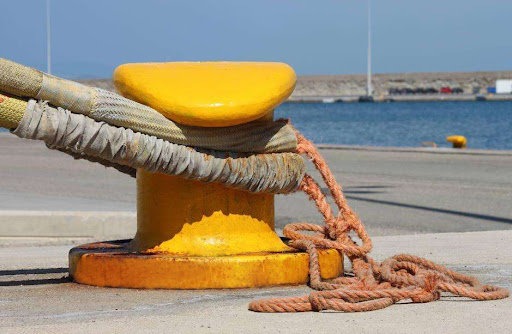
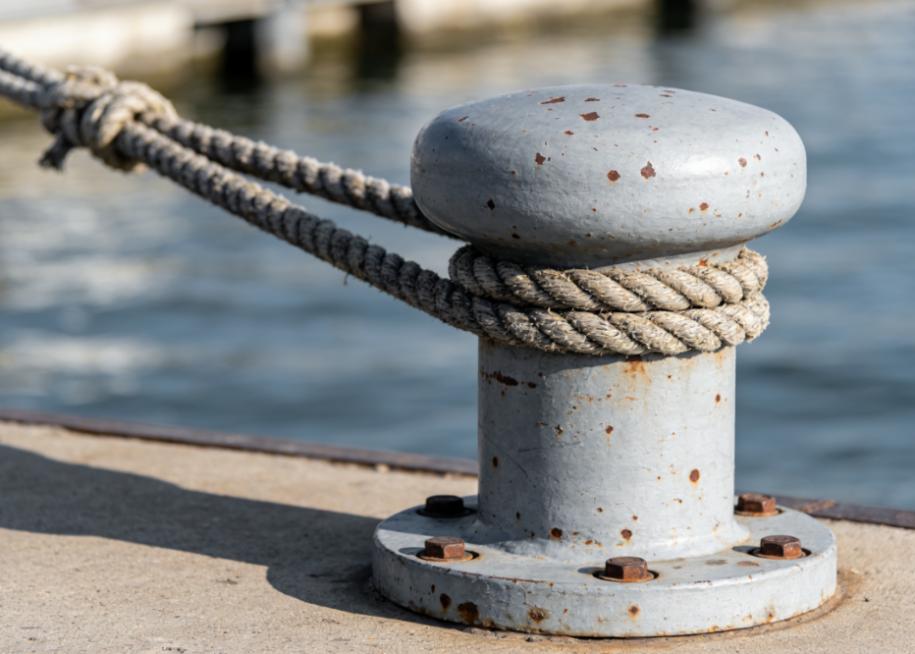
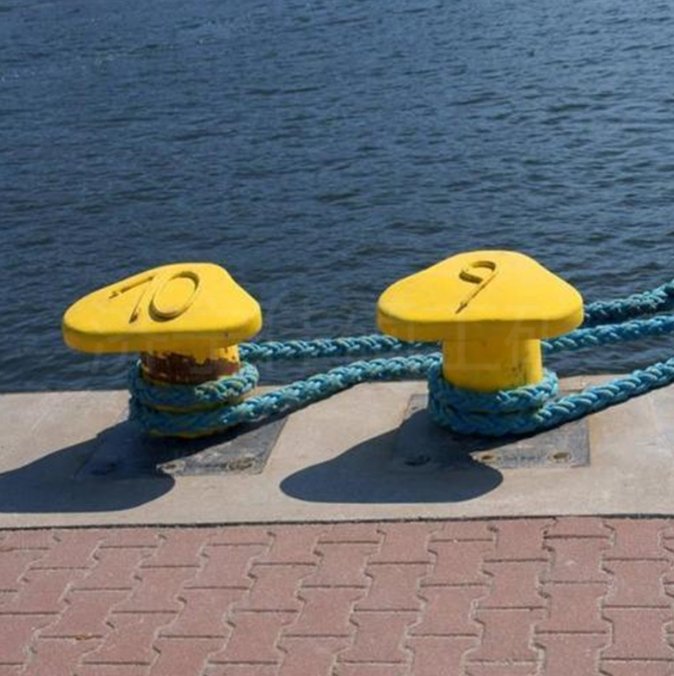
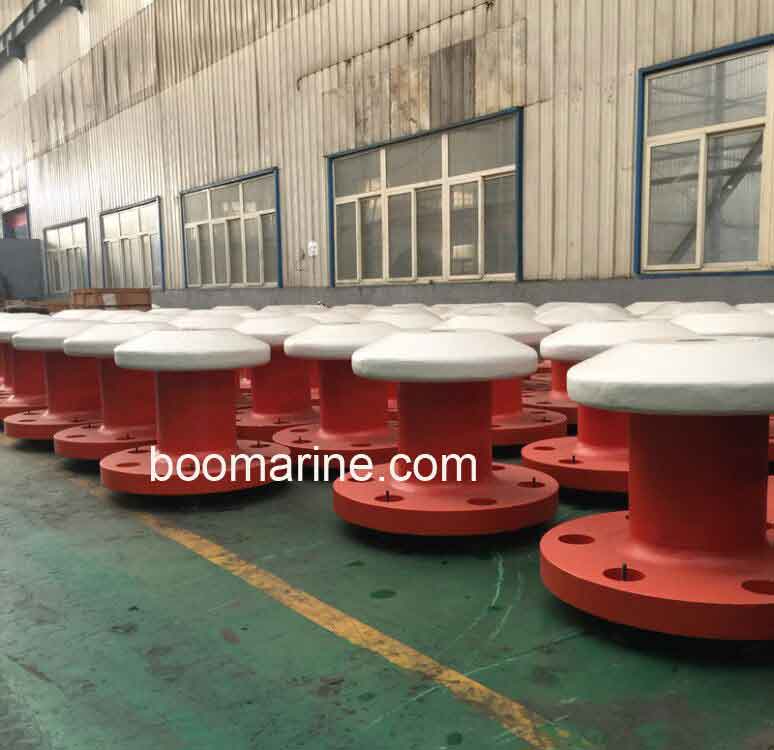
Marine Bollard: A broad term referring to all sturdy short posts permanently fixed to shore-based structures such as docks, quay walls, breakwaters, or dry docks. It serves as the “anchor point” connecting ships to the land.
Core Function: To bear and secure cables from the ship, safely mooring thousands or even tens of thousands of tons of vessels in a designated position, resisting the effects of wind, waves, and currents.
Primary Classification: Shore-based facilities.

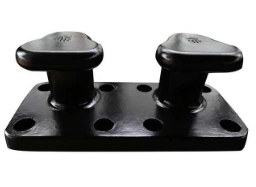
Bitts: A specific subclass of Marine Bollard. It refers specifically to mooring bollards installed in pairs, usually sharing a common base, and topped with mushroom-shaped or cross-shaped raised caps.
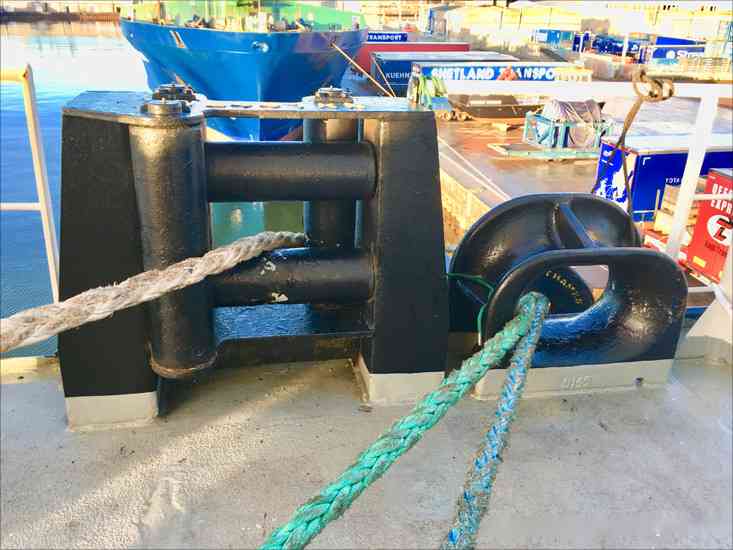
Core Function: Primarily installed on the ship’s deck (e.g., at the bow and stern), they are used to secure the “ship end” of a mooring line. The crew secures one end of the line to a Bitt on the ship, while the other end is thrown ashore and looped onto a Bollard on the dock.
Primary Classification: Shipboard equipment.
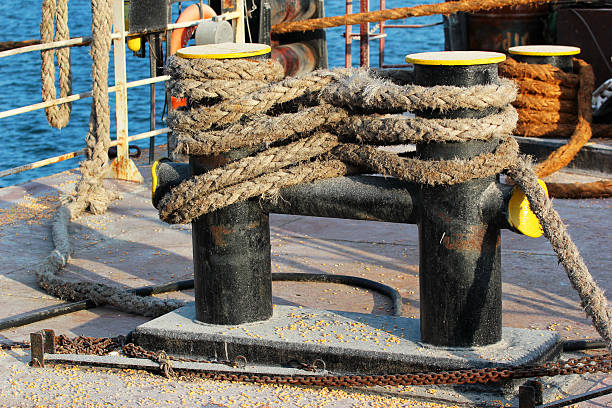
Simply put, one is “on shore,” and the other is “on the ship”—this is their most intuitive distinction.
Structural Differences: Marine Bollards vs. Bitts
Structurally, marine bollards and bitts differ significantly.
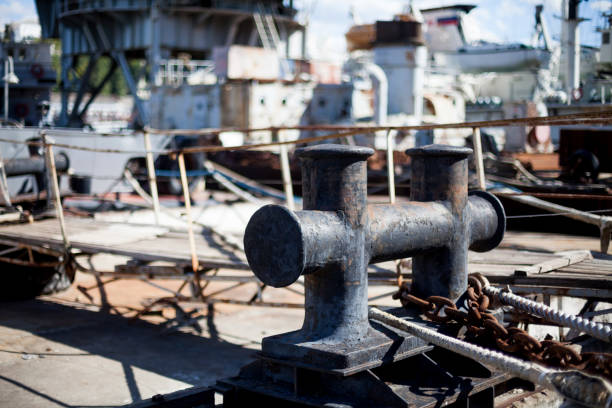
Marine bollards are larger as single or double units. The tops are flat and a bit rounded to capture a vessel’s mooring lines and hold them securely. The materials are cast iron, steel and other alloys that resist corrosion over the long-term use near the marine environment.
Bitts consist of a pair of vertical steel bollards. The designs are simple and compact to fit. They are also used on vessels that are more confined or will be at the mooring for a shorter time. Steel is strong but used at lighter capacities due to its smaller size.
Marine Bollards vs. Bitts: Functional and Usage Differences
Both marine bollards and bitts are used for dry mooring but there is a difference in how the products will be used.
Marine bollards provide an anchor point of significant strength and for that reason, they are an absolute necessity to ensure that large vessels do not move laterally or even shift in position at a mooring. They are used in large ports. They are used in docks, and dry docks where moored vessels are subjected to in-slip and stood high-tension forces. For marine bollards, conditions are present which are very high. Harsh marine conditions and strong storm waves present long-term mooring requirements.

Bitts are helpful for short durations of mooring. Their design is simpler and more flexible. A situation that may call for bitts is the short-term berthing of smaller boats. Bitts are used for small boats and vessels that do not require an elaborate mooring procedure or a quick setup and takedown. For more information on the installation and use of mooring equipment, please see our mooring equipment installation guide.
Marine Bollards vs. Bitts: Load Capacity Comparison
Load capacity is a key difference between Marine Bollards and Bitts.
Marine Bollards offer a higher load capacity that is designed for the deep mooring of large vessels. Bollards are designed with the large tensile forces around the vessel during winds and waves. Load capacity is measured in tons for large vessels including cargo ships and tankers.
On the other hand, Bitts are designed for smaller vessels with short term berthing in mind. Bitts can also have a tensile force applied but design is more towards flexability and ease of use which is short term and will not carry the large forces of Marine Bollards.
Factors to Consider When Choosing Between Marine Bollards and Bitts
The choice between Marine Bollards and Bitts depends on specific needs, port size, and vessel type.
Suitability of the Environment
- Large Ports and Vessels: If the port’s berthing facilities need to endure the remaining pull of large cargo ships, tankers, or other large vessels, then Marine Bollards are the most suitable option. Their design of high sea withstands malfunctioning bearing capacity and large robustness make safe berthing even in rough seas malfunctioning weather easy.
- Small Vessels and Short-Term Berth: For small vessels or scenarios requiring only temporary berthing, Bitts are far more suitable. Bitts are easier to maintain, smaller in footprint, more operationally versatile and more adaptable to scenarios that require rapid operational takeoff and landings.
Economic Factors
Marine Bollards are more expensive in general as a result of their structure being more complex as well as their required materials being more robust. They are more appropriate for long-term investment of resources particularly in harbor and large vessel applications.
Summary
Relationship Summary: Bitts are a specific form of Bolard. All Bitts can be called Bolards, but not all Bolards are Bitts.
Understanding this distinction is not just about mastering the terminology, but also about gaining a deep understanding of how ship mooring systems work. The next time you approach a port or a ship, try to identify them; you’ll discover the ingenuity in the design of every detail in marine engineering.