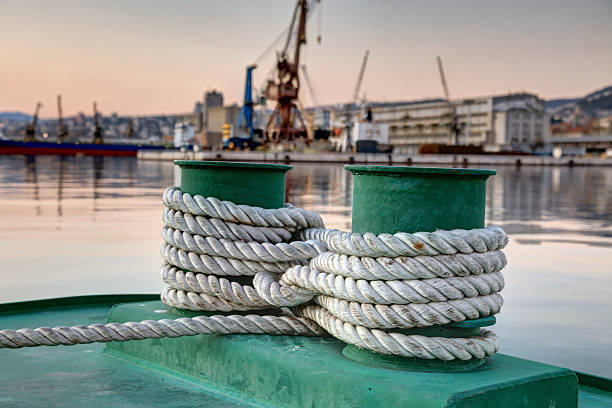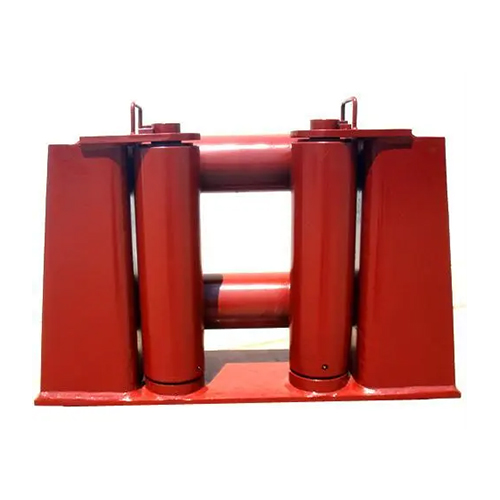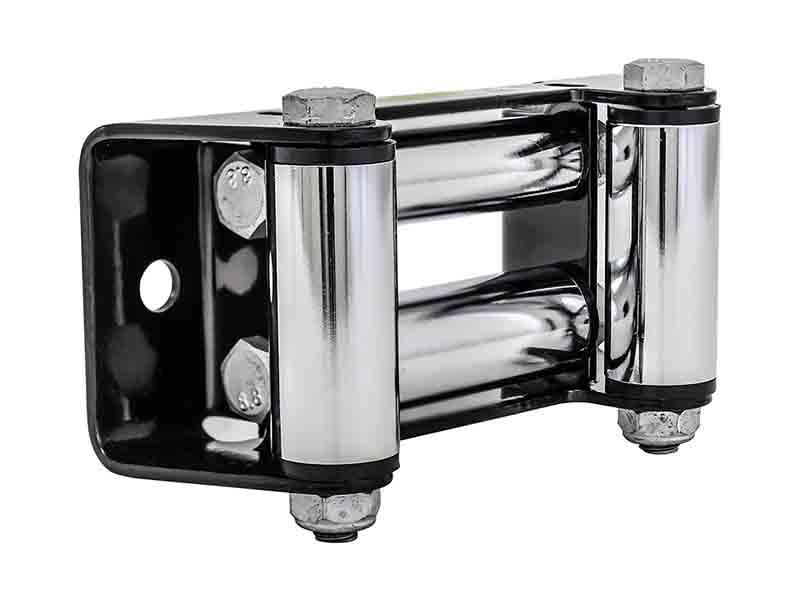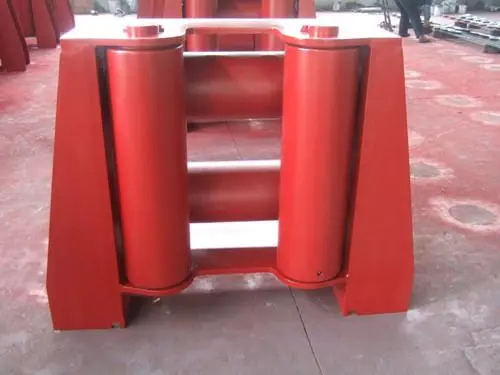
In extremely harsh offshore operation environments, whether it is a large FPSO (Floating Production Storage and Offloading vessel), a semi-submersible platform, or the emerging floating offshore wind turbine (FOWT), the mooring system is the “lifeline” for its safe operation. And on this lifeline, the guide pulley (Fairlead) plays a crucial role.
In offshore mooring platforms, the mooring system needs to withstand various complex loads such as strong winds, waves, tides and ocean currents. The function of a fairlead is to ensure that the mooring lines can pass smoothly between the platform structures, while avoiding direct friction between the cables and the platform structures, thereby enhancing the safety and stability of the entire mooring system.
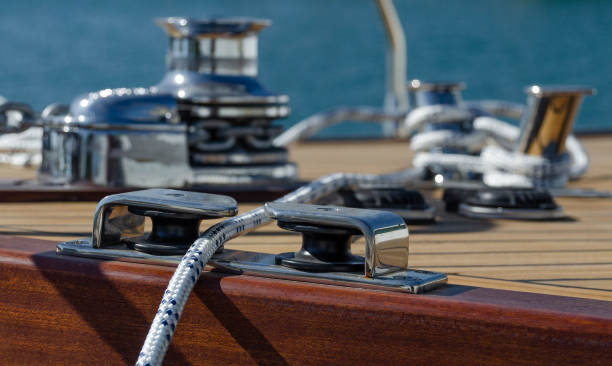
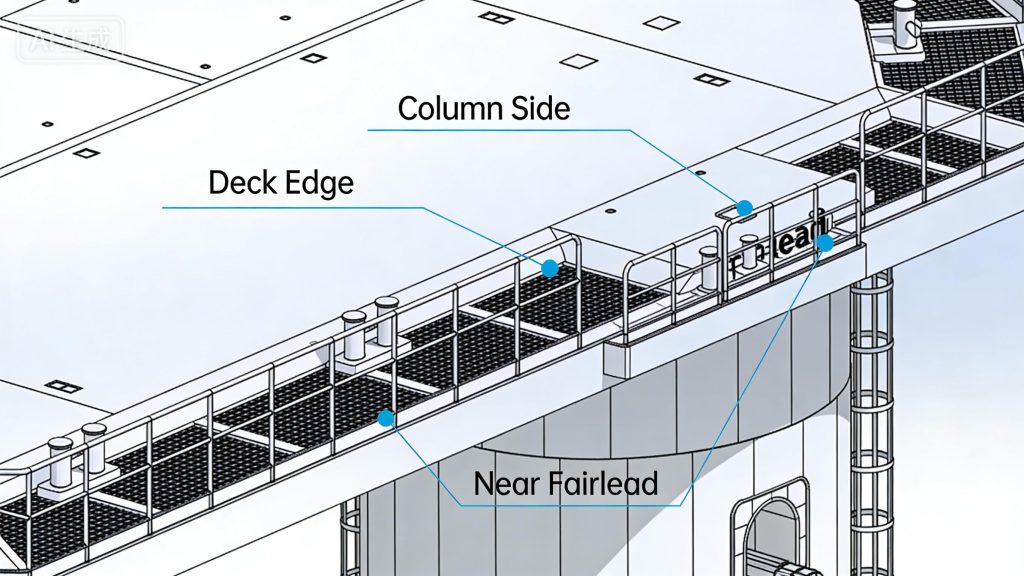
In practical applications, fairleads are usually installed at the edge of the platform deck, on the column structures or on the mooring winch, together with the mooring piles and anchor chain system to form a complete mooring system.
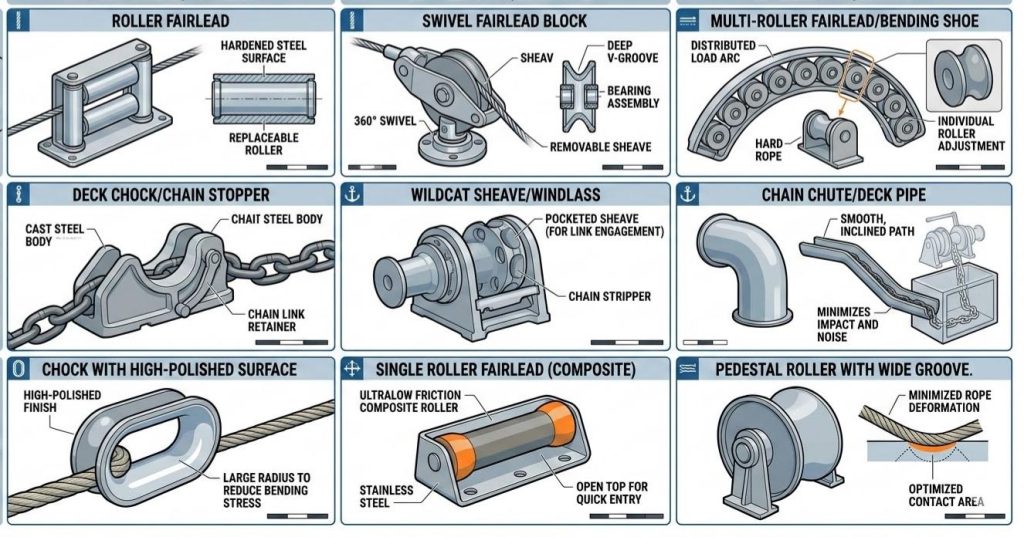
Main Types of Fairleads in Marine Applications
Underwater Sheave Fairleads
The underwater wheeled winch device is usually installed in the underwater part of the platform pillars. Its core design involves the use of large-diameter pulleys (Sheaves) to reduce the bending stress of the anchor chain or steel wire rope during the guiding process.
This design is particularly suitable for permanent mooring systems as it can significantly reduce the fatigue damage to the cables.
Rotary Fairleads Device
The rotary fairleads device has 360-degree rotation capability and can automatically align itself according to the force direction of the anchor chain. Usually, it adopts a bending shoe or pulley structure inside.
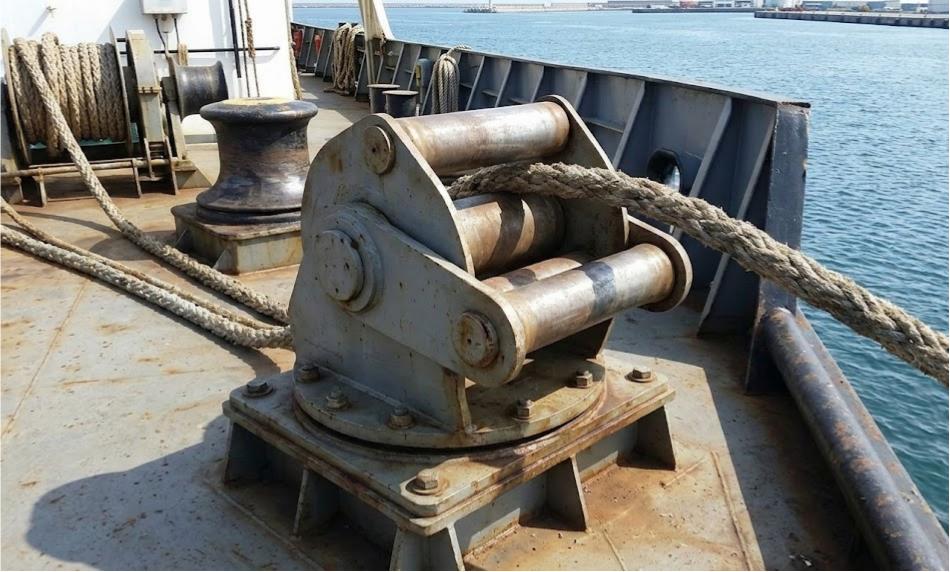
Its automatic alignment function eliminates the lateral force of the cable, greatly protecting the platform structure and the cable itself. It is the preferred choice for FPSO and semi-submersible platforms.
Anchor Chains vs. Steel Wire Ropes Fairleads
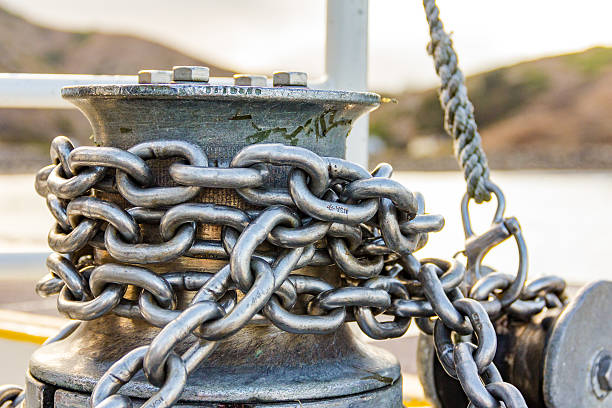
Anchor Chain Fairleads: The groove design must precisely match the shape of the anchor chain links (usually five or seven groove designs), to prevent the links from twisting when subjected to force.
Wire Rope Fairleads: The ratio of the diameter of the pulley to the diameter of the rope (D/d ratio) is a key parameter, and it must be large enough to prevent the internal fibers of the wire rope from fatigue.
Key Design Considerations for Offshore Fairleads
In the application of offshore platforms, the design of fairleads must take into account several key factors.
Load standards for the guide device
- Proof Load: Usually requires reaching 70%-80% of the breaking load without causing permanent deformation.
- Breaking Load: Must match or exceed the minimum breaking load of the guided anchor chain.
Application of High-performance Materials
To cope with the extreme pressure in the deep sea, modern winch drums extensively employ:
High-strength structural steel, such as Q345E or higher-grade forged steel, ensures excellent impact toughness even at low temperatures.
Self-lubricating composite bearings: In situations where frequent manual grease injection is not feasible underwater, using composite bearings such as reinforced polytetrafluoroethylene (PTFE) or composite materials can ensure decades of free rotation.
Cable type compatibility
Different cables require different cable winch structures. Incompatibility will directly cause the cables to break and the cable winches to be damaged.
For example, steel cables, anchor chains, and synthetic fiber cables (such as polyester, nylon, etc.) have different requirements for the structure of the cable winch.
Environmental conditions
The tensioner is usually installed in the tidal range or splash zone, which is the most corrosive area in the marine environment. In addition to using corrosion-resistant materials, heavy anti-corrosion coatings (such as epoxy ceramic coatings) and sacrificial anode cathodic protection are also typically employed.
The offshore platform undergoes continuous minor displacements due to waves, which means there are millions of back-and-forth bending pressures between the tensioner and the cable. Detailed finite element analysis (FEA) must be conducted during the design stage to ensure that the equipment will not fracture due to metal fatigue during its 20-25-year service life.
Installation Locations on Offshore Platforms
On offshore platforms, the common installation locations of fairleads include:
- The edge of the platform deck
- The mooring guide frame
- The column structure
- The anchor chain guiding system
A proper installation location can ensure that the mooring lines maintain the optimal angle and reduce unnecessary stress.
The Advantages of Using High-Quality Fairleads
In large-scale marine engineering projects, high-quality mooring equipment can significantly enhance the reliability of the mooring system.
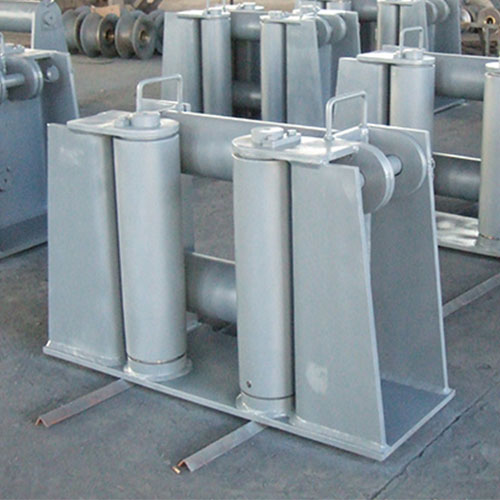
The superior Roller Fairleads have the following advantages:
- Reducing cable friction
- Extending the lifespan of mooring cables
- Improving system safety
- Adapting to high-load offshore engineering environments
For FPSOs, offshore platforms, and large vessels, reliable mooring equipment is an important guarantee for ensuring long-term stable operation.
The mooring winch, as a key component of the foundation of offshore mooring platforms, although small in size and easily overlooked, directly determines the reliability of the entire mooring system and the safety of platform operations.
From shallow seas to deep seas, from oil and gas platforms to offshore wind power, high-performance mooring winches are becoming important indicators of the high-end, intelligent and long-life of marine engineering equipment. Reasonable selection, standardized installation and regular maintenance are necessary to maximize the role of the mooring winch in the mooring system and ensure the safe, stable and efficient operation of offshore platforms.
In the future, as deep-sea development continues to deepen, the requirements for the bearing capacity, lightweight, corrosion resistance and intelligent monitoring of mooring winches will continue to increase. High-performance mooring winches will have broader application prospects.