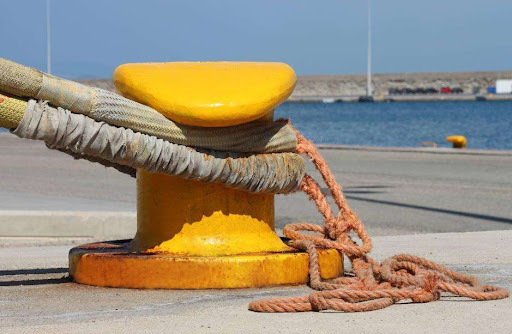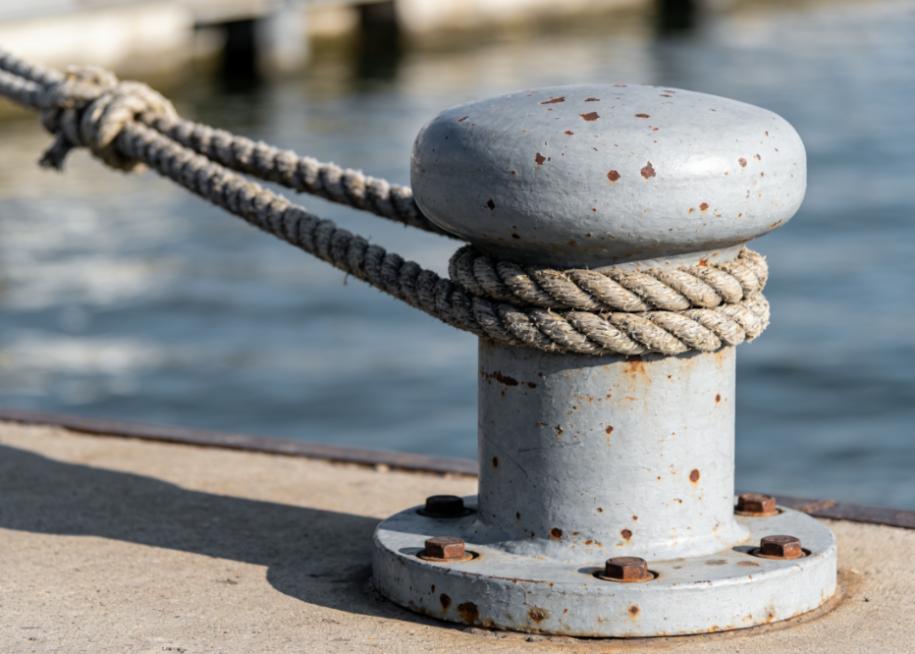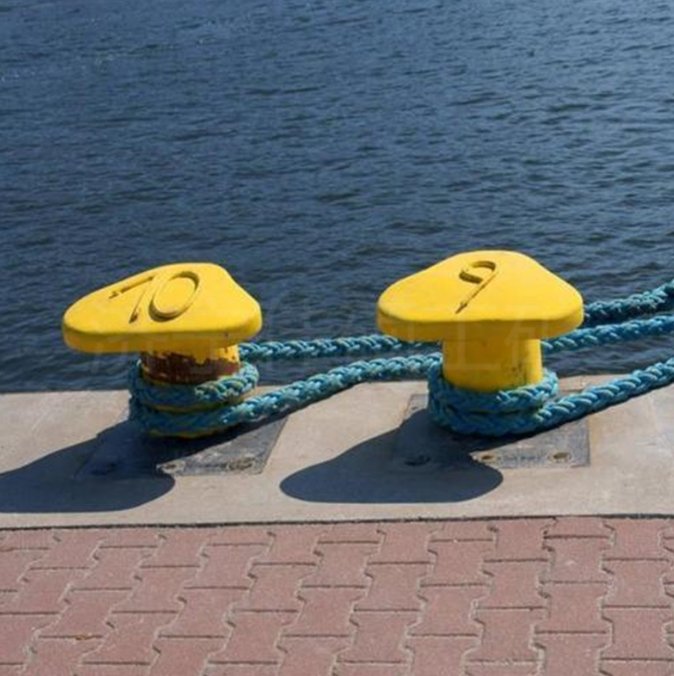
Choosing the correct mooring bollard is more than merely choosing the right capacity. Two bollards of the same rated load may react differently if the mooring lines come to them at different heights and angles.
T-head bollards and kidney bollards are both frequently used on commercial berths; however, they are appropriate for various mooring situations. This guide examines their design, line angles and common uses, then considers the important things to verify when selecting a mooring bollard.
Key Differences Between T-Head and Kidney Bollards
The simplest difference to spot is the head form, but the design also impacts how the mooring line may be guided around the bollard.
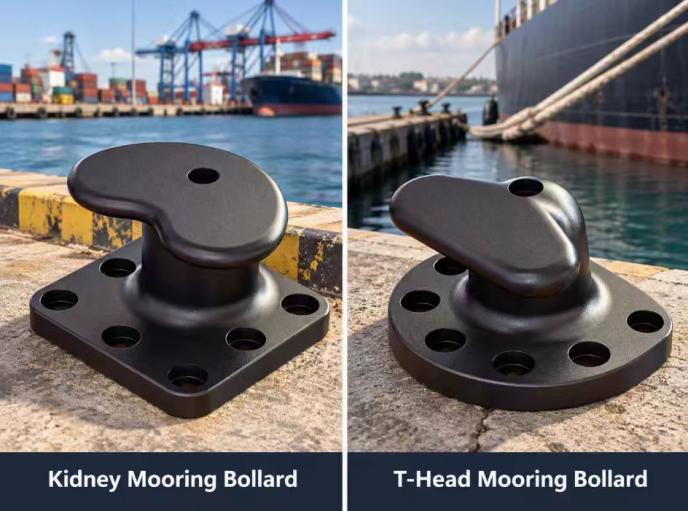
T-Head Bollard
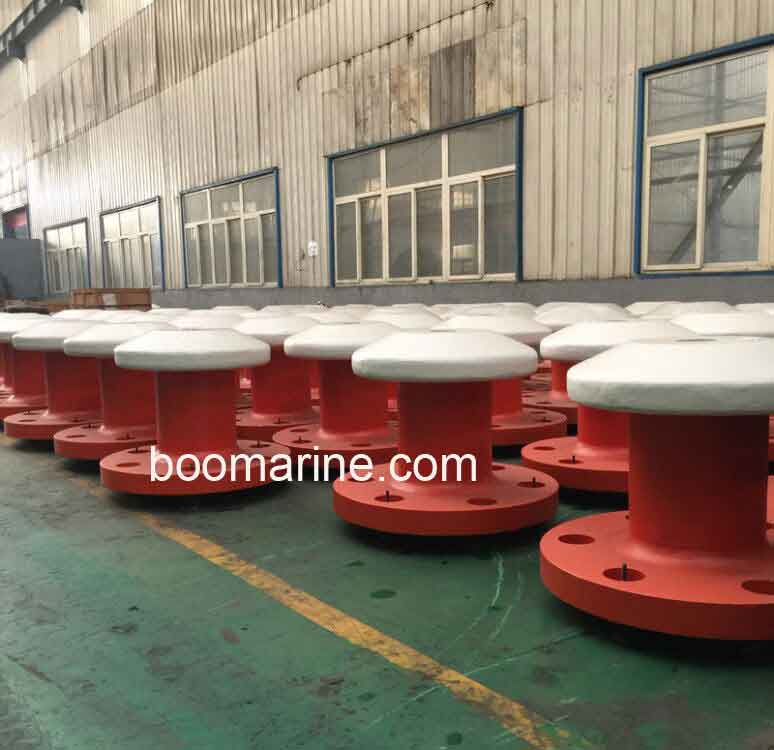
A T-head bollard features a large T-shaped head which helps to hold the mooring line and accommodate a wide range of line angles, particularly in the vertical direction. This is important when vessels of different sizes share the same berth or when the line angles fluctuate significantly during loading, unloading or tidal movement.
Boomarine specifies a horizontal line loading range of ±180° and a vertical range of +75° to -15° for its T-head bollard. This relatively wide vertical range is one reason the design is often considered for berths with steeper line leads.
Kidney Bollard
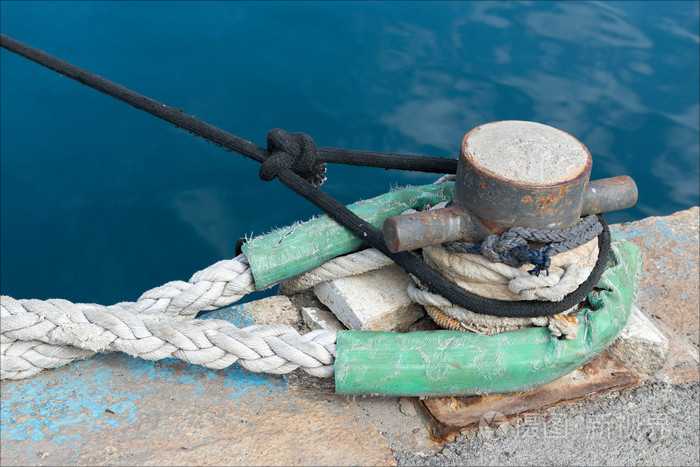
A kidney bollard has a compact, rounded head with a wider upper section that helps prevent the line from slipping off. Its simple shape makes it a practical general-purpose option for many jetties and wharfs.
For Boomarine’s kidney bollard, the specified vertical loading range is +60° to -15°, although a vertical mooring angle of 0° to 40° is recommended for normal use. The design is particularly suited to smaller tidal ranges and is also commonly used for warping operations along quaysides.
The main differences can be summarized below.
| Factor | T-Head Bollard | Kidney Bollard |
| Head Design | Wide T-shaped head | Rounded kidney-shaped head |
| Line Angles | Better suited to steeper vertical angles, depending on design | Best suited to low or moderate line angles |
| Tidal Conditions | Handles greater changes in vertical line direction | Well suited to smaller tidal ranges |
| Mooring Arrangement | Useful for varied or more demanding arrangements | Practical for straightforward arrangements |
| Typical Berths | Bulk, container, ferry, oil and gas terminals | Commercial jetties, fishing wharfs, bulk cargo and general berths |
| Main Advantage | More flexibility in line direction | Simple and practical arrangement |
When to Use T-Head Bollards?
Where line direction is expected to change, rather than be almost constant, a T-head bollard might be considered.
- Changing line angles: In cargo operations, the vertical lead of the mooring line may alter with change of vessel freeboard or change of water levels. The T-head shape allows for more room for these adjustments.
- More varied mooring arrangements: Multi-use berths can accept vessels with diverse fairlead positions and mooring configurations. A bollard capable of taking lines from a wider range of orientations helps ease berth planning.
- Higher vertical line angles: The allowed range of vertical loading is of special interest in cases where the berth shape results in a significantly steep lead between the vessel and quay.
The type of the bollard has still to be verified according to the real line load and the berth layout. A T-head form does not automatically qualify a mooring system for all steep line conditions.
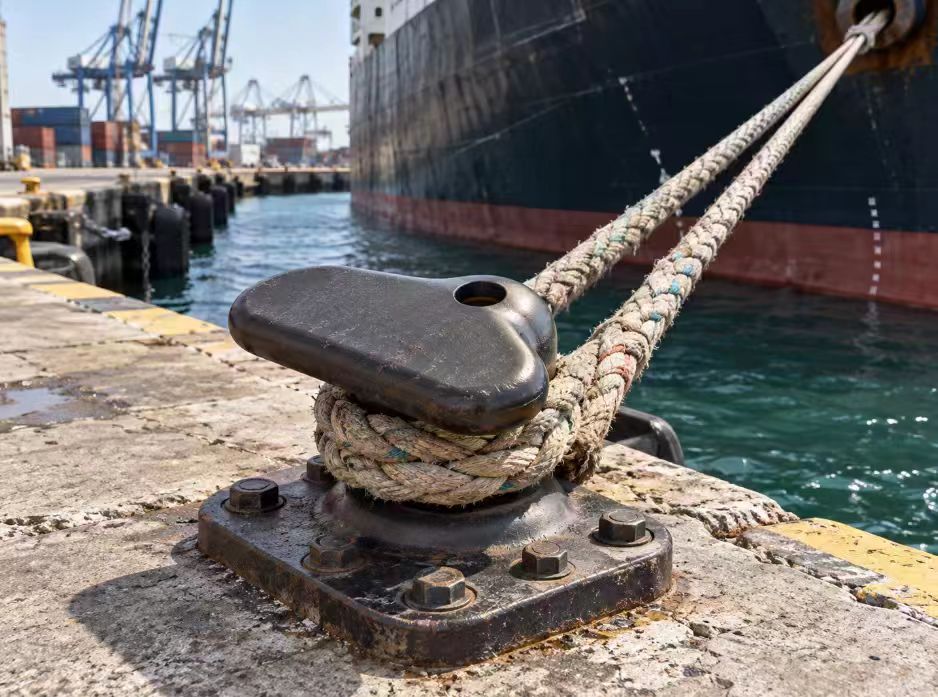
When to Use Kidney Bollards?
A kidney bollard often makes more sense when the berth layout and line direction are relatively predictable.
- Moderate line angles: The design works effectively when mooring lines approach the bollard without a steep vertical lead.
- Smaller tidal ranges: The lack of major changes in the water level means that the angle of the line is not likely to alter greatly while the vessel is alongside.
- Straightforward berth layouts: General-purpose commercial jetties and smaller berths may not require the wide line-angle flexibility offered by T-head bollards.
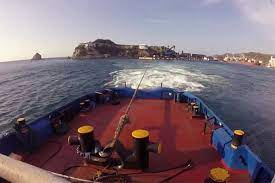
- Warping operations: Kidney bollards are also frequently employed when vessels are moved slowly along a quay using their mooring lines.
Under such conditions, the simpler design can offer a functional answer without adding features that the berth does not need.
Factors to Consider Before Selecting a Bollard
The comparison between a t head bollard vs kidney bollard should never be based on shape alone. The overall mooring arrangement matters more.
1. Required bollard capacity.
Start with the forces expected to be handled by the berth. The size of the vessel is only part of the story. The load may be affected by wind, current, waves, mooring arrangement and operational conditions.
2. Mooring line angles.
Check horizontal and vertical leads for vessels scheduled to utilize the berth. The UK Maritime and Coastguard Agency recommends mooring arrangements should use appropriate leads and avoid abrupt angles. While its advice is intended for shipboard equipment, the same idea applies when examining the full ship-to-shore mooring arrangement.
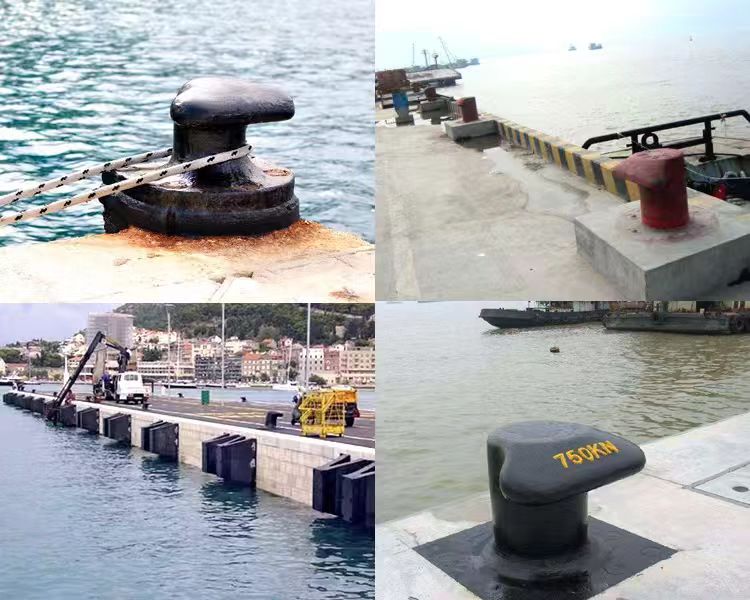
3. Tidal range and vessel movement.
Consider the vessel at different water levels and loading conditions. A bollard that works well at one freeboard may see a much steeper line angle after cargo has been loaded or discharged.
4. Foundation and anchor system.
But the ability of a bollard to withstand loads is of little value if the supporting structure cannot properly transfer the load. Therefore, the foundation, anchor bolts and surrounding concrete or quay structure should be evaluated simultaneously with the bollard itself.
Choosing the Right Bollard for Your Berth
For berths with larger variations in line direction or steeper vertical leads, a T-head bollard is frequently the more adaptable alternative. If the tide variation is minor and the mooring setup is basic, a kidney bollard may be the simpler option.
The ultimate selection should still be based on the estimated load, the range of vessels, the line’s geometry and the berth’s structure rather than the bollard’s name alone.
Boomarine provides T-head and kidney mooring bollards to suit a variety of berth circumstances. If you are comparing the two for a new or existing berth, share your required capacity and mooring arrangement to identify a suitable option.