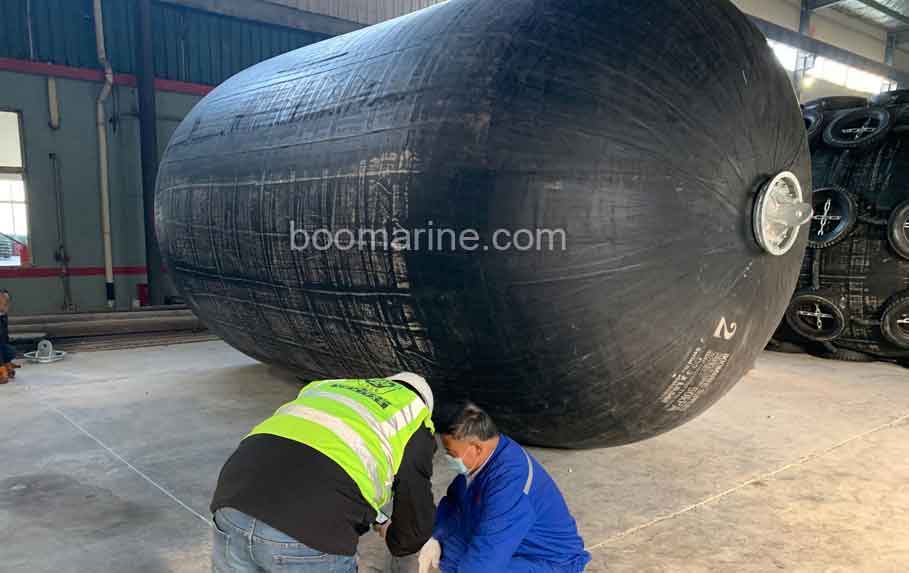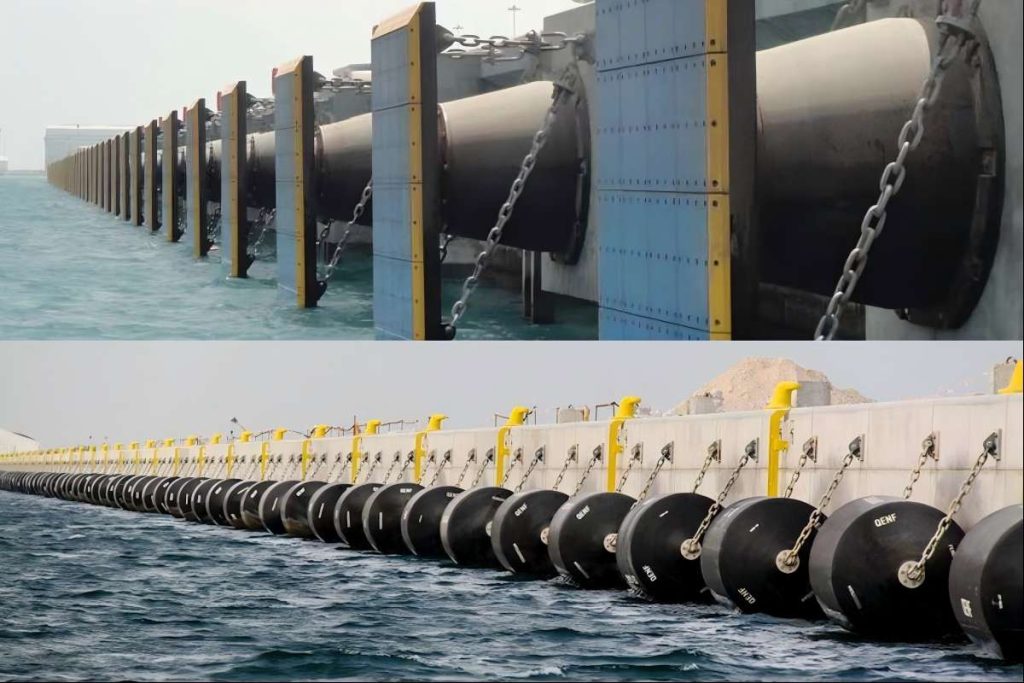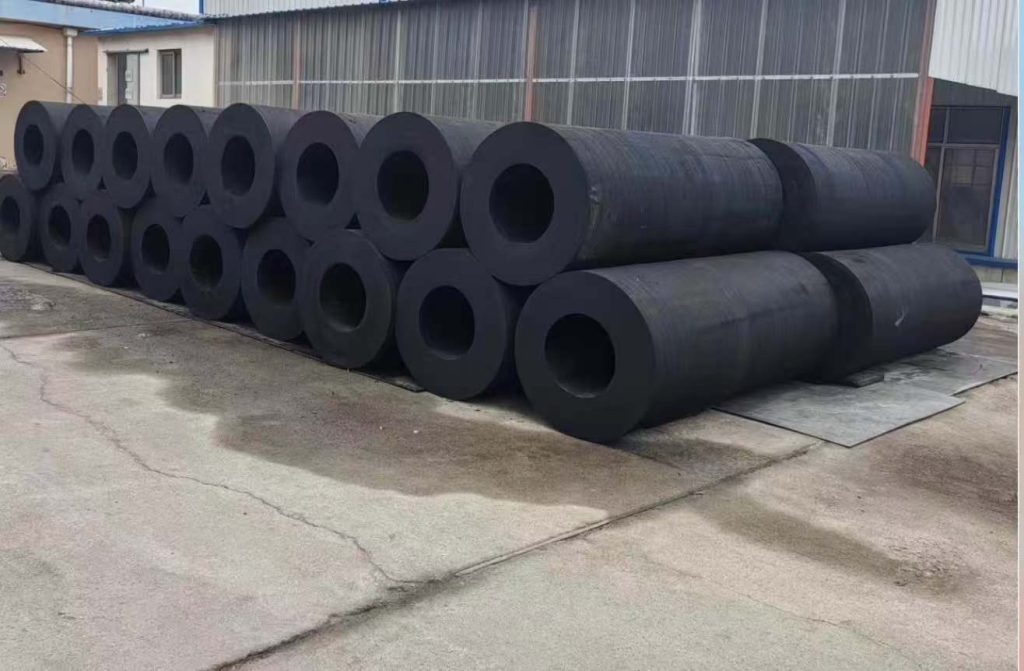
Every day, thousands of various ships dock at global ports. The huge impact force during berthing can easily damage the ship’s hull and the dock. Ship rubber protective covers can absorb kinetic energy and reduce the impact, and are the key components for ensuring the safety of port assets.
Ship rubber protective covers mainly use natural rubber and synthetic rubber. Many engineers and purchasers directly select standard specifications, but they ignore the significant influence of the rubber material on the performance, lifespan and overall cost of the protective cover.
This article will comprehensively compare the physical and chemical properties and practical application performance of natural rubber and synthetic rubber from a manufacturing perspective.
Why Rubber Material Matters in Marine Fender Performance?
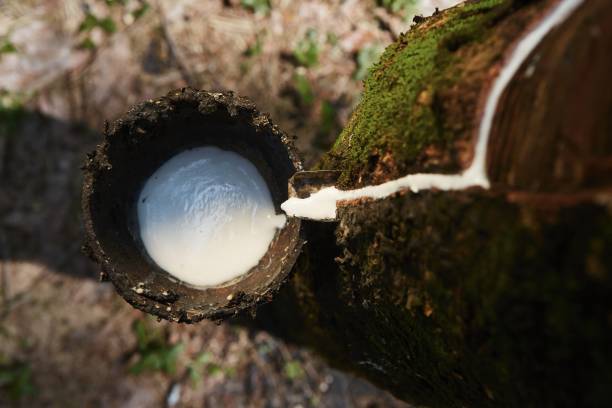
What is Natural Rubber (NR)?
Natural rubber is the latex produced by rubber trees, and its main cultivation areas are concentrated in Southeast Asia. After undergoing processes such as solidification, mixing, and vulcanization, the latex forms a material with multiple excellent mechanical properties.
The core characteristics of natural rubber include:
- Extremely high tensile strength – The tensile strength of vulcanized natural rubber is usually 25–30 megapascals.
- Outstanding elasticity and resilience – It can absorb and release energy, with minimal lag loss.
- Excellent tear resistance and fatigue resistance, capable of withstanding repeated load cycles.
- Good low-temperature flexibility, with the minimum applicable temperature being approximately -10℃.
- It is a biobased and renewable material – derived from living plants.
Natural rubber serves as the perfect material for ship mooring sheathing because its characteristics match the extreme demands needed for energy absorption and mechanical strength.
What is Synthetic Rubber?
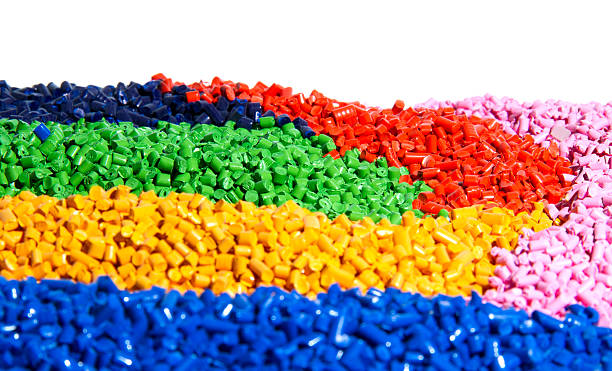
Synthetic rubber is a man-made polymer material produced through chemical synthesis. Unlike natural rubber, synthetic rubber can be formulated to meet specific application requirements, thereby achieving particular properties.
The most commonly used types of synthetic rubber in the manufacturing of marine rubber protective covers include:
- Ethylene Propylene Diene Monomer (EPDM) rubber exhibits exceptional ultraviolet light protection and ozone resistance and weather resistance which makes it suitable for outdoor marine applications
- Chloroprene rubber (CR) which also goes by the name isoprene rubber shows resistance to oil and it acts as a flame retardant while its chemical resistance properties make it appropriate for use in fuel terminal environments
- Styrene Butadiene Rubber (SBR) functions as a general-purpose rubber material which provides acceptable mechanical performance at a cost that is lower than natural rubber
- Nitrile Butadiene Rubber (NBR): Outstanding oil and fuel resistance, used in petrochemical terminals and liquefied natural gas terminals
All types of synthetic rubber can specifically compensate for the shortcomings of natural rubber – especially in terms of environmental aging resistance, and have more stable supply and prices.
Performance Comparison: Natural Rubber vs Synthetic Rubber
| Performance indicators | Natural rubber(NR) | Synthetic rubber | Most applicable scenarios |
| Elasticity / Recovery elasticity | ★★★★★ | ★★★☆☆ | High-impact berthing operations |
| Anti-aging and anti-oxidation property | ★★☆☆☆ | ★★★★★ | Long-term outdoor use |
| Resistance to seawater corrosion | ★★★☆☆ | ★★★★★ | Offshore / intertidal areas |
| Resistance to oil and chemical corrosion Operating temperature range | ★★☆☆☆ | ★★★★☆ | Petrochemical terminals |
| Tensile strength | Narrower(-10℃~60℃) | Wider(-40℃~120℃) | Arctic / tropical ports |
| Performance indicators | ★★★★★ | ★★★☆☆ | Protection for large vessels from impacts |
Energy Absorption and Deformation Performance
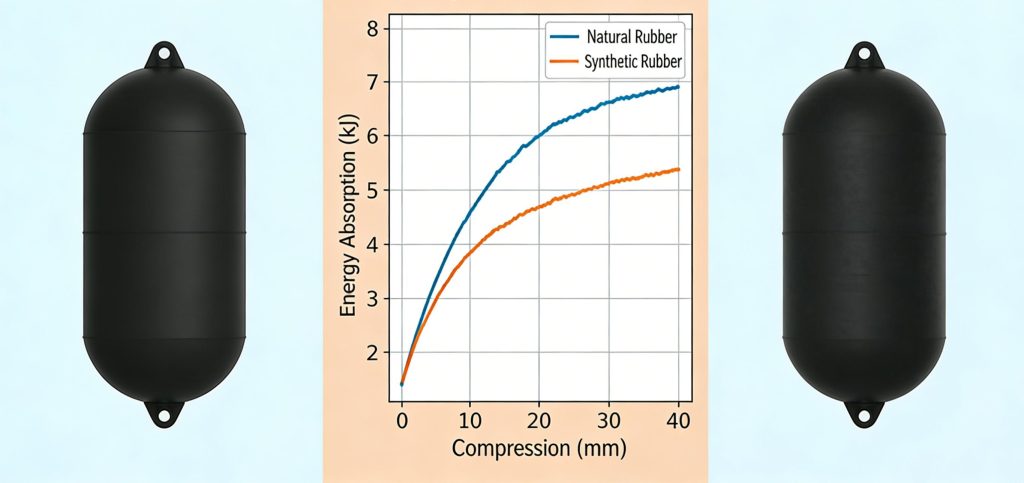
The energy absorption capability can be regarded as the most crucial performance indicator of marine rubber protective plating. When the ship comes into contact with the protective plating, the rubber needs to undergo compression deformation, store kinetic energy and gradually release it to prevent the impact load from being transmitted to the dock and the ship’s structure.
Natural rubber has significant advantages in this aspect. Its molecular structure consists of long polymer chains, and after vulcanization, the crosslinking density is high, enabling more excellent elastic energy storage. In standard compression tests, the protective plating with natural rubber as the base material has a 15%–25% higher energy absorption per unit volume compared to styrene-butadiene rubber or ethylene-propylene-diene rubber protective plating.
This advantage is particularly evident in high-frequency berthing operations – the protective plating needs to quickly restore its original shape during the intervals between consecutive berthing of the ship. Natural rubber has a quicker recovery time because it exhibits lower lag loss, which leads to decreased thermal buildup inside the rubber material.
Durability and Anti-Aging Properties
Natural rubber has its main disadvantage because it shows weak resistance to environmental aging. The polymer main chains of natural rubber will experience permanent chain breakage from extended exposure to ultraviolet rays and oxygen and ozone. The material will develop surface cracks and lose its elastic properties which will result in complete structural failure.
Synthetic rubber materials, particularly ethylene propylene diene monomer EPDM rubber, prove best because they withstand outdoor conditions while delivering superior durability. EPDM rubber main chains contain saturated polymer structures which lack double bonds that would make them vulnerable to ozone damage. The material maintains its mechanical properties in outdoor marine environments for a period of 20 to 30 years.
For ports located in areas with high ultraviolet intensity (tropical and equatorial regions), or for protective covers that are constantly exposed to air and sunlight, the durability advantage of synthetic rubber is particularly prominent. It can even offset the long-term strength advantage of natural rubber in energy absorption.
Chemical resistance and oil resistance
Natural rubber has limited resistance to petroleum-based oils, solvents, and corrosive chemicals. After coming into contact with fuel or hydraulic oil, natural rubber will swell, soften, and age more rapidly. Therefore, it is not suitable for fuel terminals, petrochemical terminals, or offshore oil and gas platforms.
Chloroprene rubber and nitrile rubber are preferred materials for these environments: chloroprene rubber can withstand moderate concentrations of oils and a variety of common chemicals; nitrile rubber performs well in environments with long-term exposure to hydrocarbons and is suitable for mooring areas of floating production storage and offloading (FPSO) units, liquefied natural gas terminals, and refinery breakwater terminals.
Temperature adaptability
Natural rubber performs well within a moderate temperature range, with an applicable temperature range of approximately -10℃ to 60℃. When the temperature is below the lower limit, the rubber becomes harder and more brittle; when it exceeds the upper limit, the phenomenon of thermal aging accelerates.
Synthetic rubber, on the other hand, has a wider working temperature range. For example, EPDM rubber can maintain flexibility at -40℃ and can withstand continuous high temperatures of over 120℃. This makes synthetic rubber the preferred material for polar ports, extreme deep-sea marine environments, or industrial ports affected by steam and high-temperature goods.
Applications of Different Types of Natural Rubber and Synthetic Rubber
Different types of marine rubber protective covers are designed for specific berthing scenarios. The selection of rubber formulations usually depends on the geometric shape of the protective cover and the usage environment.
Fender Types and Rubber Material Preferences
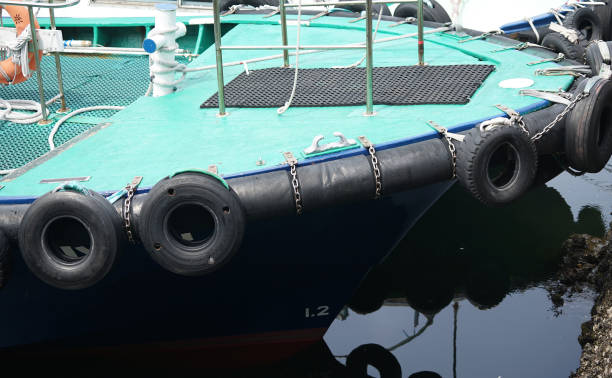
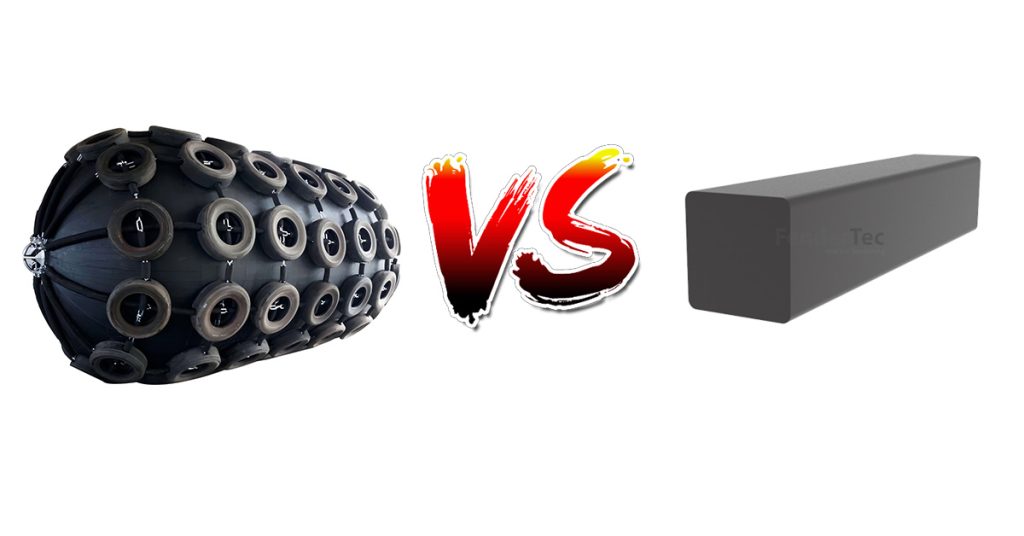
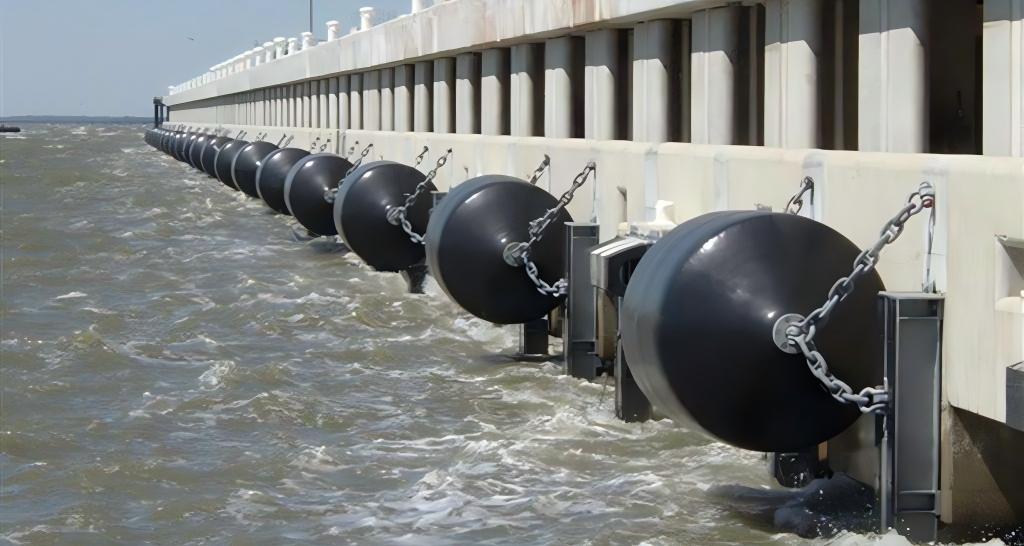
Are one of the most widely used fender types globally. Due to the need to withstand high deformation loads during berthing, cylindrical fenders are usually made of natural rubber. Their simple geometric structure makes it convenient to conduct consistent performance tests and quality control using natural rubber formulations.
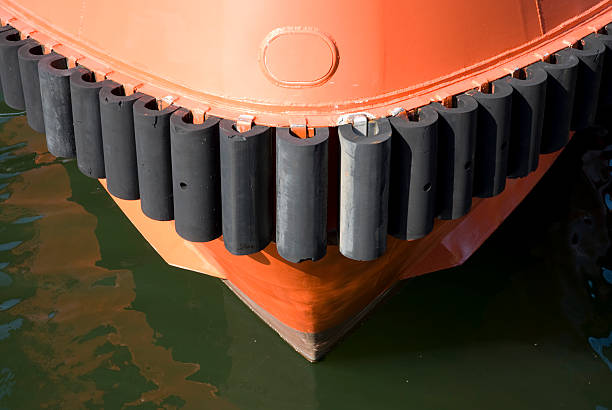
Are widely used in small vessels’ ports, ferry terminals, and side fender systems. These mid-level fenders can choose either natural rubber or synthetic rubber based on requirements: if energy absorption performance is prioritized, natural rubber is selected; if durability is emphasized, EPDM/neoprene rubber is chosen.
Unit-type fenders and conical fenders
Are high-performance fenders designed for large commercial terminals of container ships, bulk carriers, and oil tankers. Due to the high requirements for energy absorption, natural rubber is usually the preferred formulation; however, for terminals in tropical or highly corrosive environments, the application of EPDM blend formulations is increasing.
Foam-filled and inflatable fenders
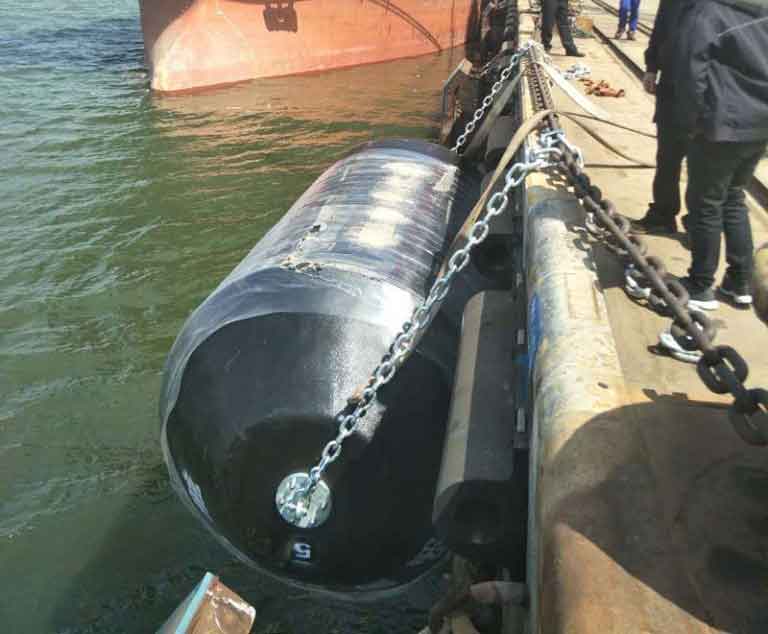
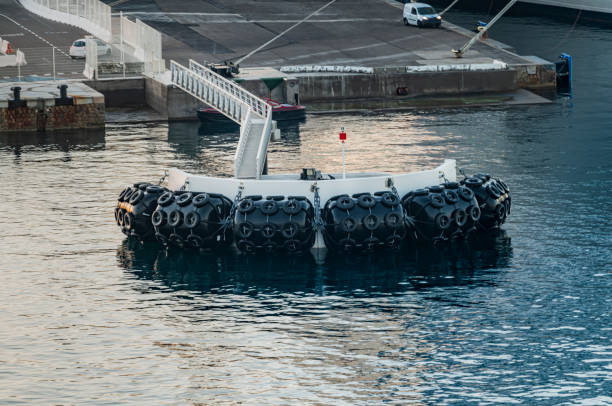
The outer shell of foam-filled fenders is usually made of polyurethane or EPDM rubber to achieve the best weather resistance; the outer protective cover of inflatable rubber fenders uses neoprene rubber, which can resist oil pollution in port waters.
Plate-type and strip-type fenders
Are typically used as facing or protective barriers. These fenders have high requirements for wear resistance and low requirements for energy absorption, and styrene-butadiene rubber and EPDM rubber are commonly used as preferred materials due to their high cost-effectiveness.
The Best Application Scenarios of Natural Rubber
Large commercial seaports with high vessel throughput
Piers where large displacement vessels (super oil tankers, bulk carriers, ultra-Panamax container ships) dock
Tugboat piers that require the protective sheathing to quickly recover after repeated berthing
Ports with temperate climates without strong ultraviolet rays or chemical pollution
Scenarios with natural rubber as the core technical indicator, focusing on the maximum energy absorption per unit volume
The Best Application Scenarios of Synthetic Rubber
- Mooring systems for offshore oil and gas platforms and floating production, storage and offloading vessels.
- Marine terminals for petrochemicals, oil refining and liquefied natural gas.
- Ports in tropical, equatorial or Arctic climate zones.
- Facilities with limited maintenance access (remote breakwater terminals, island ports).
- Facilities requiring extended service life and reduced replacement frequency.
Hybrid rubber formulation: Can it balance the advantages of both?
In recent years, rubber formulation technology has been continuously advancing, and manufacturers have been able to develop hybrid formulations that combine natural rubber with synthetic rubber. These formulations aim to retain the excellent energy absorption properties of natural rubber while incorporating the weather resistance of synthetic elastomers.
For example, a natural rubber / ethylene propylene diene monomer (EPDM) rubber blend can have an energy absorption capacity of up to 90% – 95% of that of pure natural rubber, while its UV resistance and aging resistance far exceed those of pure natural rubber. Such hybrid formulations are increasingly being used in high-end protective deck scenarios – such as large container terminals in tropical regions, where strict requirements for performance and durability are present.
Although the price of hybrid formulations is higher than that of single polymer formulations, their balanced performance can reduce the need for performance trade-offs during the selection process.