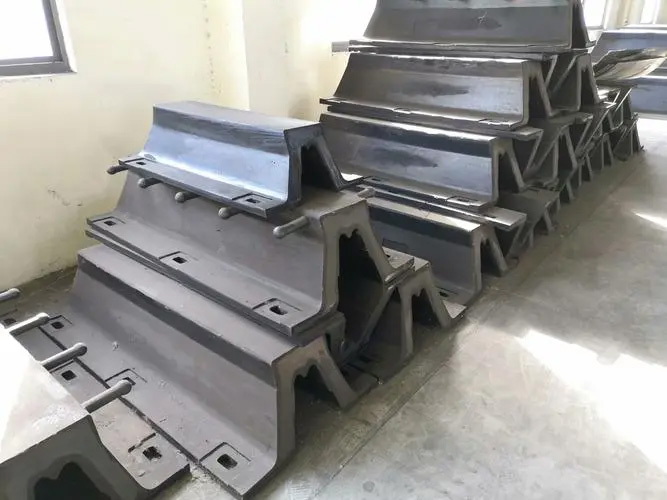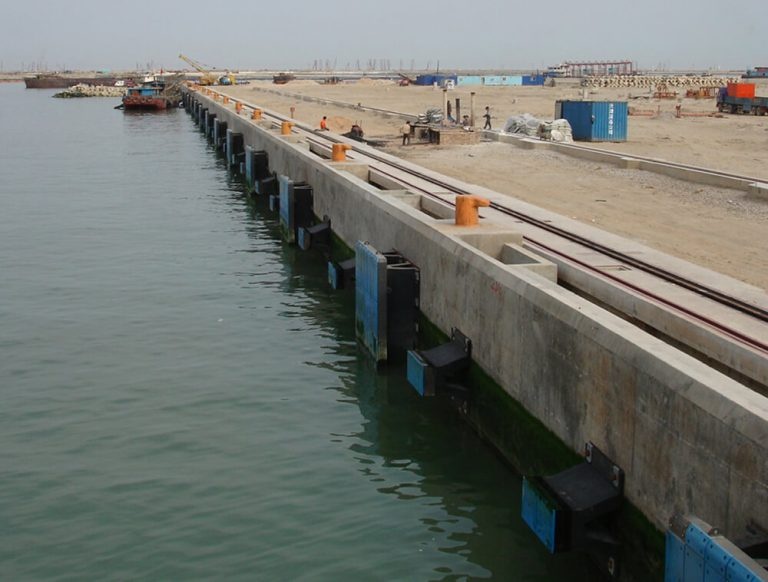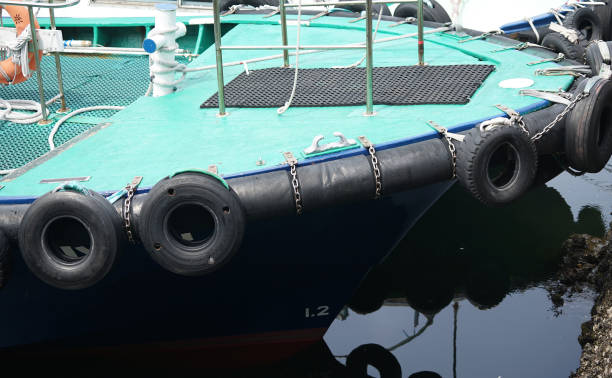
If you have ever watched a massive cargo ship ease into a dock, you know it is not a gentle process. That is where Rubber Fender systems come in. They absorb the impact. But here is the thing: rubber alone is not always the best surface to actually touch the ship.
That is why you keep hearing about UHMWPE sheet in the same breath as marine fenders. It is not just an accessory. In many modern port designs, it is a critical part of the system.
Think about it this way. The rubber fender absorbs kinetic energy by compressing. But ships don’t always come in perfectly parallel; they drift, angle, or slide. When steel rubs against rubber, you get friction. That friction creates lateral forces and shear stresses that tear up the rubber over time and also scratch the hull paint.
So the industry came up with a pretty neat solution. Put a super-slick panel between the two. That panel is the UHMWPE plastic sheet. It takes the rubbing so the rubber does not have to. The rubber handles the compression; the UHMWPE handles the sliding. It is a simple division of labor, but it makes a world of difference in terms of durability and maintenance.
The Role of UHMWPE Sheet in a Marine Fender System
Before we dig into the specifics, let us get one thing straight about where this material actually fits. In a typical marine fender energy transfer setup, you have a clear chain of contact:
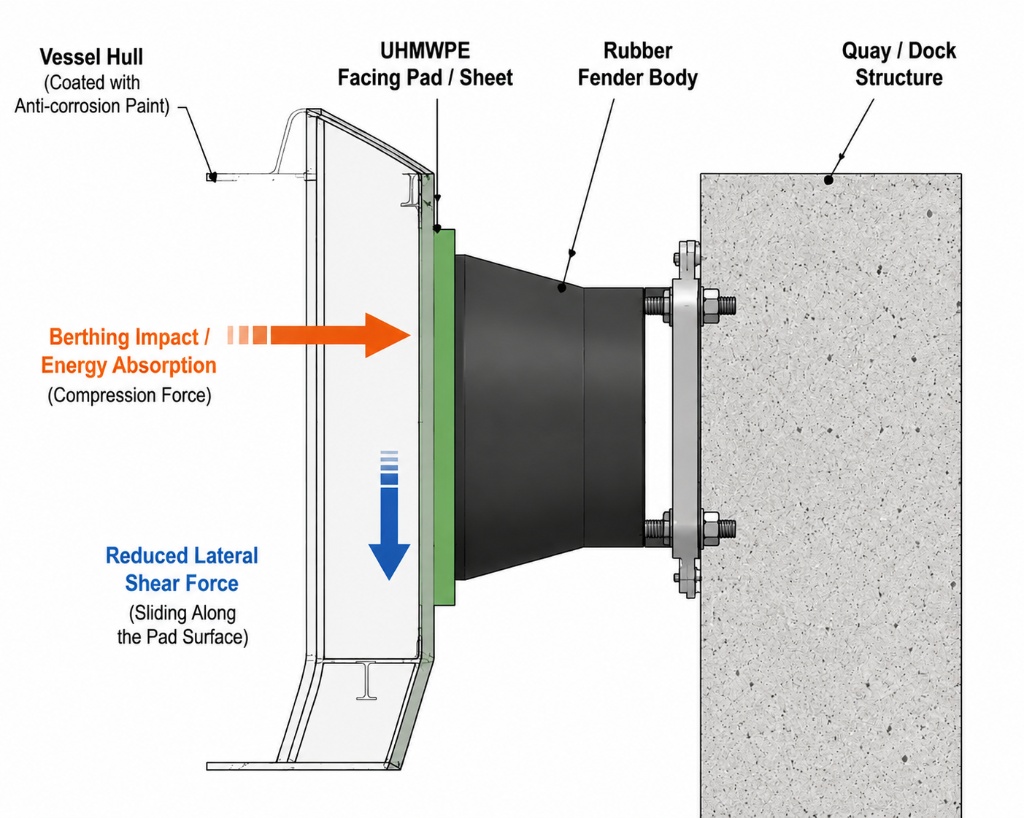
Vessel Hull → UHMWPE Facing Pad → Rubber Fender Body → Quay Structure
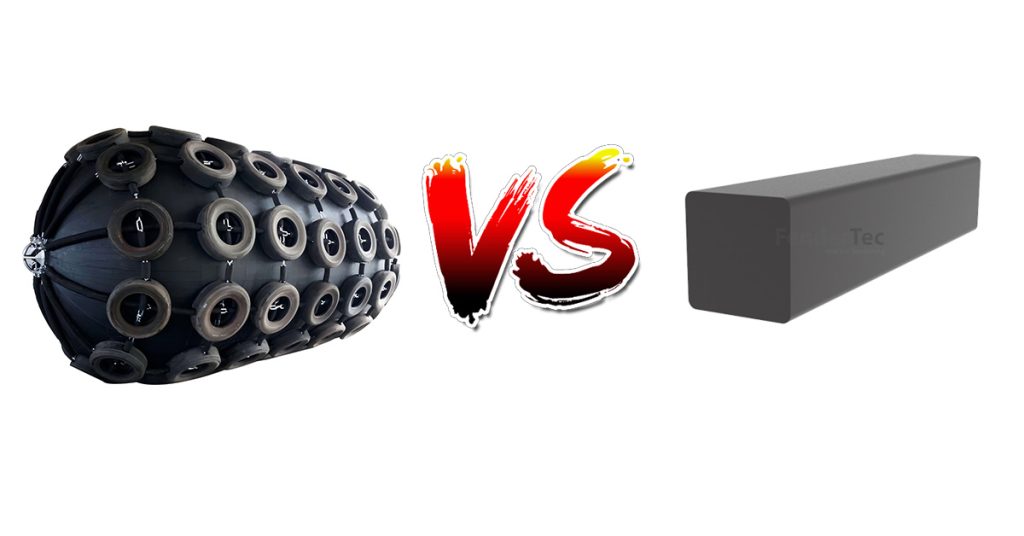
Each link has a job. The ship’s hull brings the energy. The UHMWPE panel acts as the interface, keeping things smooth. The Rubber Fender body does the actual absorbing, and you can read more about how it compares to other fender types if you like. The quay structure holds it all in place.
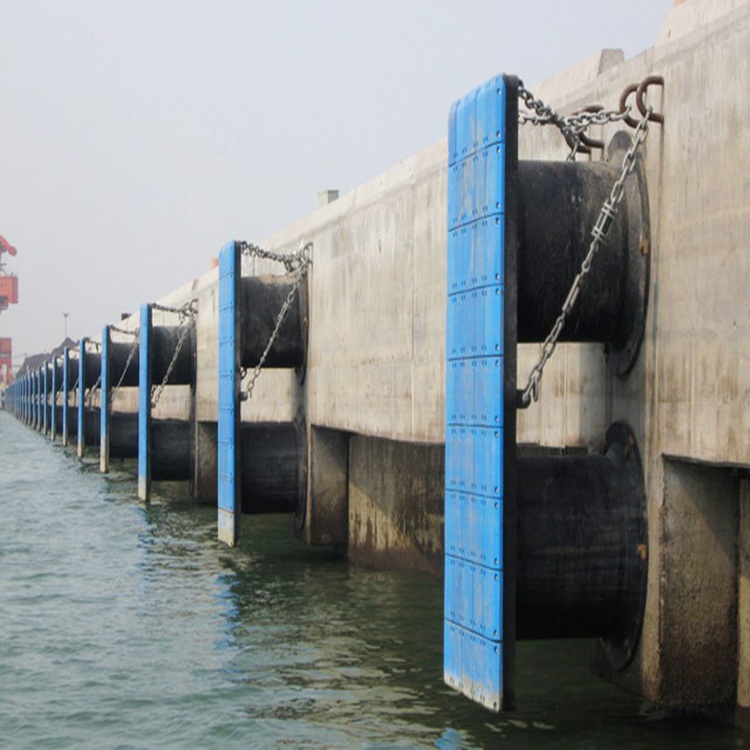
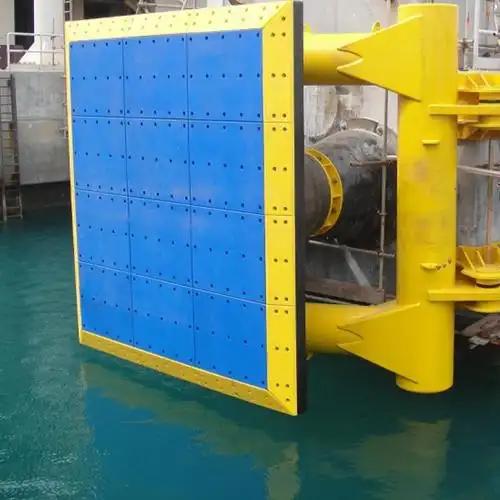
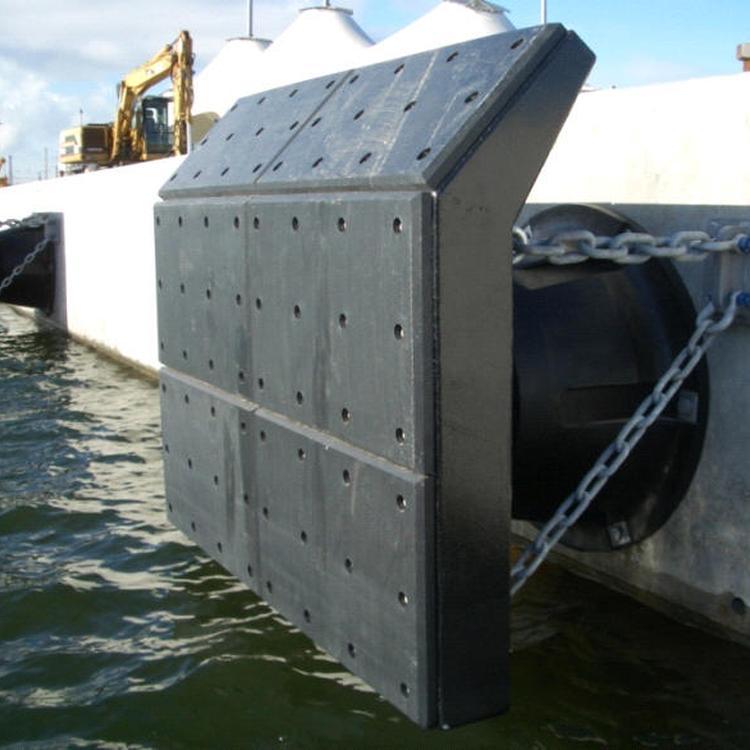
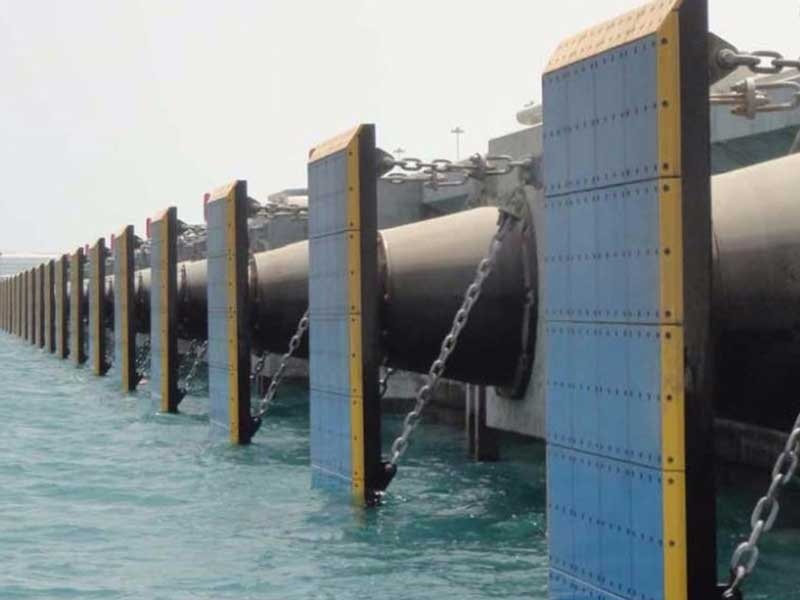
So when you look at a rubber fender mounted on a dock, do not just see the big black rubber piece. Look at the front of it. If you see a smooth, often white or yellowish panel bolted onto the face, that is your UHMWPE sheet. That is the part that actually touches the ship. That is the wear surface.
Why Are UHMWPE Sheets Used on Rubber Fenders?
Here is the short answer: to stop the rubber from getting chewed up by shear forces.
Let me paint you a picture. A fully loaded bulk carrier is coming in. It is heavy, really heavy. As it contacts the fender, it does not just push straight in. It also moves sideways, scraping along the dock face. If that steel hull grinds directly against the rubber fender, you get a lot of grip. Too much grip. That grip translates into tearing forces on the rubber surface.
Rubber is great at absorbing compression. It is not nearly as great at handling repeated abrasion or high shear. The surface starts to wear down, develop cracks, or even rip chunks off.
Now, put a layer of UHMWPE sheets in between. The friction drops way down. The hull slides instead of dragging. The rubber stays safe. And the ship’s hull? It does not get scratched up either. The paint stays intact because the contact is with a smooth polymer, not rough rubber or bare metal.
The 3 Main Functions of UHMWPE Sheet on Rubber Fenders
Let us break this down into three clear benefits. If you are specifying parts for a port project, these are the points that matter.
1. Reducing Friction Between Vessel and Fender
This is the headline feature. UHMWPE sheet has a really low coefficient of friction. In marine conditions, wet and salty, you are typically looking at a range of about 0.1 to 0.2. That depends on the exact surface finish and conditions, but it is consistently low.
Compare that to rubber on steel, which can be way higher. When a ship comes in at an angle, pushed by wind or current, that low friction lets it slide into position smoothly. No jerking, no grabbing, no sudden loading on the fender. Just a controlled, steady contact.
2. Protecting Ship Hull and Fender Surface
Think of this as the sacrificial layer. The hull has an anti-corrosion coating. That coating is expensive to repair. If you use a steel plate as a fender facing, you are basically asking for scratches and gouges. If you just use rubber, the rubber gets cut up by barnacles or weld seams on the hull.
The UHMWPE sits right in the middle. It is hard enough to resist cutting, but soft enough not to damage the paint. It takes the abuse so both the hull and the rubber stay in better shape for longer.
3. Reducing Maintenance Requirements
Ports are busy places. Fenders get used every single day. Over time, the facing material wears down. With a rubber-only system, that wear is on the main fender body. Replacing a whole rubber fender is expensive and time-consuming.
With UHMWPE plastic sheet panels, you have a wear part that you can swap out. When the panel gets thin or damaged, you just unbolt it and bolt a new one on. The rubber fender behind it stays pristine. That keeps the long-term costs down and cuts downtime.
How UHMWPE Sheet Works with Different Rubber Fender Systems
Not all fenders are the same. Different designs handle energy in different ways. But the need for a low-friction facing is pretty universal. Here is how it applies to a few common types.
- Super Cone Fender: This is a popular design for larger vessels. The cone shape gives a progressive reaction force. The UHMWPE panel is typically mounted on the frontal steel plate that pushes against the cone. It gives the ship a smooth surface to slide against, which reduces the shear load transferred back to the rubber cone itself. That is important because the cone is designed to compress axially, not twist or get dragged sideways.
- Cell Fender (Cylindrical or Pneumatic): These are the big round ones you see on many terminals. They roll or compress. A UHMWPE facing on the front contact area helps distribute the vessel’s pressure more evenly. Rubber buffers help prevent the ship hull from digging into rubber when moving and provide a consistent contact surface even while underway.
- Arch Fenders: These more compact fenders are often used on smaller docks or for specific applications, and may include UHMWPE strips or pads directly integrated into the contact face to lower friction and improve wear resistance without changing its overall profile too significantly.
All these instances share one fundamental goal. In each, rubber absorbs energy similarly. You are just changing what the ship touches.
Key Properties That Make UHMWPE Sheet Suitable for Marine Applications
So why UHMWPE specifically? What makes it better than other plastics or metals for this job? It comes down to the molecular structure. This stuff has an extremely long chain length, with a molecular weight in the millions. That gives it some unique physical traits.
- Low Friction: Low friction systems are self-lubricating, eliminating the need for grease or oil lubricants to remain slippery in wet environments where other forms of lubricant would simply wash away. This makes them suitable for applications involving water.
- High Abrasion Resistance: Thanks to its long molecular chains, TPE offers exceptional abrasion resistance. It can tolerate years of sliding contact without wearing away, outliving many other materials in this service.
- Impact Resistance: Our panel is tough enough to withstand even the coldest of climates without cracking, even when subject to heavy ship impacts that exceed its weight capacity. In northern ports where temperatures often dip well below zero, this feature becomes especially valuable.
- Seawater Resistance: Stainless steel is impervious to salt water, chemicals, marine growth or any other external forces which might threaten it – no corrosion, rusting or degradation from chemical attacks occurs on this material.
- Low Water Absorption: Our material absorbs very little moisture, an essential feature in marine environments where materials that absorb too much moisture can warp or swell over time, impacting its dimensions stability. Bolts stay tight, panels stay flat, and gaps remain predictable.
UHMWPE Sheet Installation on Rubber Fender Front Panels
Installing these panels is not rocket science, but some engineering details matter. The main principle is that the panel needs to be secure, and there cannot be any metal sticking out.
Machining: Before installation, the edges of the panels are usually beveled at a 45-degree angle. That helps the ship’s hull slide smoothly onto the panel. If the edge is square, it could catch or snag. Bolt holes are typically pre-drilled with precision. You want everything to line up perfectly when you are on the dock, wrestling heavy panels into place.
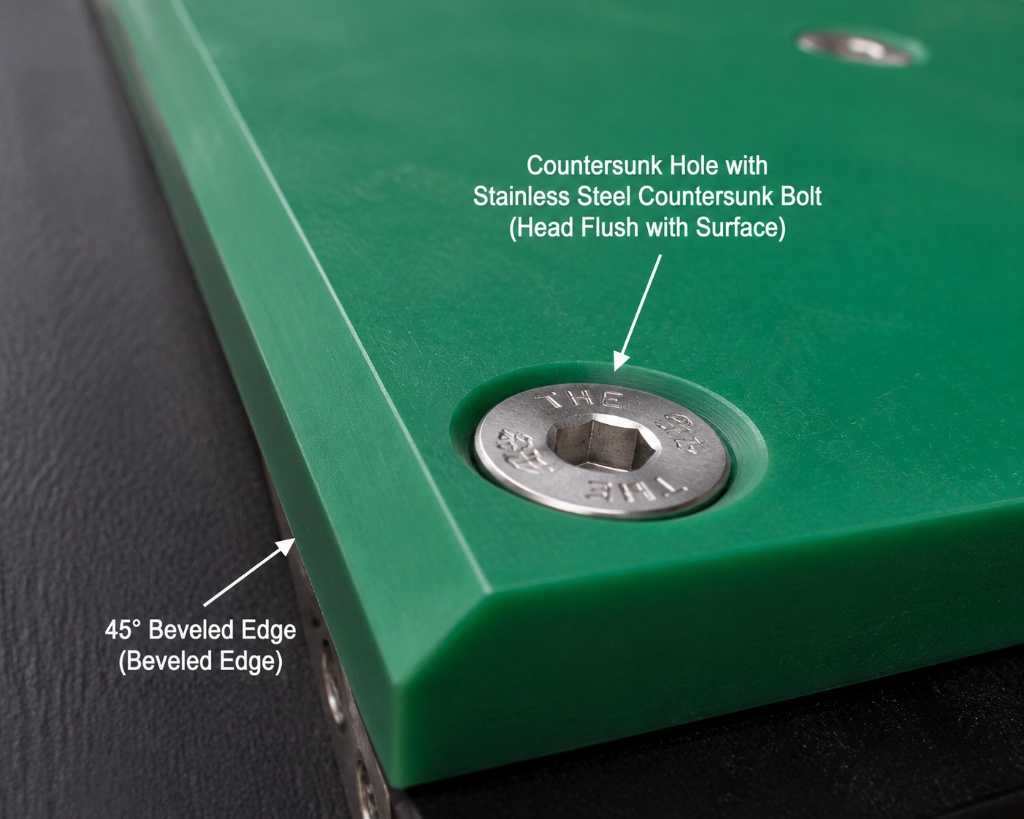
Fixing Methods: There are a few ways to attach them. Countersunk bolts are the most common. You use stainless steel bolts that sit flush with the surface. The bolt head is recessed so that it never touches the hull. That is non-negotiable. If a bolt head sticks up, it will gouge the ship. Some designs use chains or U-anchors to hold the panels, depending on the fender configuration. But the bolt method is the standard for most large cone and cell fenders.
Design Considerations: Plastics expand when they heat up. A panel sitting in the hot sun can grow quite a bit. That is why you need to leave expansion gaps between panels. If you butt them tight together, they can buckle or warp. A proper gap lets them breathe.
UHMWPE Sheet vs Other Fender Facing Materials
Let us be honest, you have choices. You could use HDPE, you could use steel plate, or you could just let the rubber take the contact. But those all come with trade-offs. Let me lay it out for you.
| Property | UHMWPE Sheet (PE-1000) | HDPE | Steel Plate | Rubber Only |
| Friction Coefficient (Wet) | Low (about 0.1 – 0.2) | Moderate (around 0.25) | Higher (about 0.40) | Very High (above 0.60) |
| Wear Resistance | Excellent | Moderate | Needs anti-corrosion treatment; can damage hull coating | Prone to tearing and abrasion |
| Hull Coating Protection | Good (non-metallic contact) | Good | Poor (hard impacts scratch paint) | Average (high friction) |
| Water Absorption | Extremely Low | Extremely Low | None, but it rusts | Low |
| Maintenance Ease | Good (individual panels can be swapped) | Needs frequent replacement | Needs frequent anti-corrosion grinding and painting | The whole unit often needs replacing if damaged |
The table tells the story. UHMWPE offers the best balance of low friction, wear resistance, and protection for both the ship and the fender. Steel is tough but damages ships. HDPE is cheaper but wears faster. Rubber alone creates too much friction. That is why UHMWPE keeps winning out on new projects.
UHMWPE Sheet Price Factors for Marine Fender Systems
Now, let us talk about the price of UHMWPE sheet. Because we all know cost is a factor. But the price is not just about the size. A thin panel made from recycled material costs a lot less than a thick panel made from virgin resin. You need to look at what you are buying.
- Material Grade: This is the big one. Virgin material (PE-1000) is the top tier. It gives you consistent performance across the board. Reprocessed or recycled material is cheaper. But it does not have the same molecular weight or consistency. It might be fine for a lightweight application, but if you are protecting a big fender at a heavy-use terminal, the virgin material usually justifies its cost.
- Dimensions and Thickness: More material means more money. It is that simple. A 60mm panel weighs and costs more than its 30mm counterpart; size and shape also have an impact on raw material usage.
- Custom Machining: Off-the-shelf sheets may be cheaper, but if you require complex hole patterns, countersunk bolt holes, or beveled edges that require custom machine work then that costs extra. Precision work takes effort. It is worth it though. You want a panel that fits right and installs quickly.
- Quantity: This is basic B2B buying. The more panels you order, the lower the per-unit cost. The setup and machining costs get spread out. So if you are outfitting a whole dock, you get better pricing than if you just need one replacement panel.
The UHMWPE sheet price varies, but you should think of it as a long-term investment. Spending a bit more now on a quality panel saves you money on repairs and downtime later.
Common Industry Thickness Reference for UHMWPE Facing Pads
Choosing the right thickness is not guesswork. It depends on the forces involved. A small pleasure craft does not need the same protection as a supertanker. Here is a general reference for what you see in the industry.
| Thickness | Typical Application Reference |
| 20mm – 30mm | Smaller ports, marinas, or light-duty tug protection. |
| 40mm – 50mm | Standard commercial cargo docks. This is the most common range. |
| 60mm – 80mm | Heavy-duty container terminals, bulk cargo ports, high-impact zones. |
| 80mm+ | Extreme applications like large oil and gas terminals or ports with very high-frequency usage. |
These numbers are a starting point. You still need to work through the engineering calculations based on the specific vessel sizes, berthing energies, and the fender design itself. You should always check the fender selection requirements for your project.
And do not forget the environment. If you are in a sunny region, go for black panels. The carbon black additive gives UV protection. In tropical ports, the sun can degrade plastics pretty fast. A black panel will last much longer than a white one in that kind of direct exposure.
Final Thoughts
Putting a UHMWPE sheet on the front of a rubber fender makes a lot of sense. It keeps the friction low, protects the ship’s paint, and saves the rubber fender from excessive wear. The upfront cost is easy to justify when you look at the maintenance savings.
You just need to pick the right grade, the right thickness, and make sure it is installed correctly. Pay attention to the bolt heads and leave those expansion gaps. It sounds like small stuff, but those details make the difference between a system that lasts decades and one that needs repairs every few years.
As a marine fender supplier, Boomarine offers rubber fender products for all kinds of applications. The best UHMWPE facing for your project really comes down to the specific vessel traffic, the fender design, and the local conditions.
If you are planning a new terminal or upgrading an existing dock, this is one area where it pays to get the details right. A good low-friction facing panel is a simple thing, but it has a huge impact on how well the whole system works.