Let’s be real. If you run a port or a terminal, you already know the problem. Ships don’t dock perfectly straight. They come in at an angle. They slide sideways. That creates a ton of shear force. Without the right protection, your rubber fenders get torn up. And the ship’s hull? Scratched, gouged, paint stripped. That’s expensive.
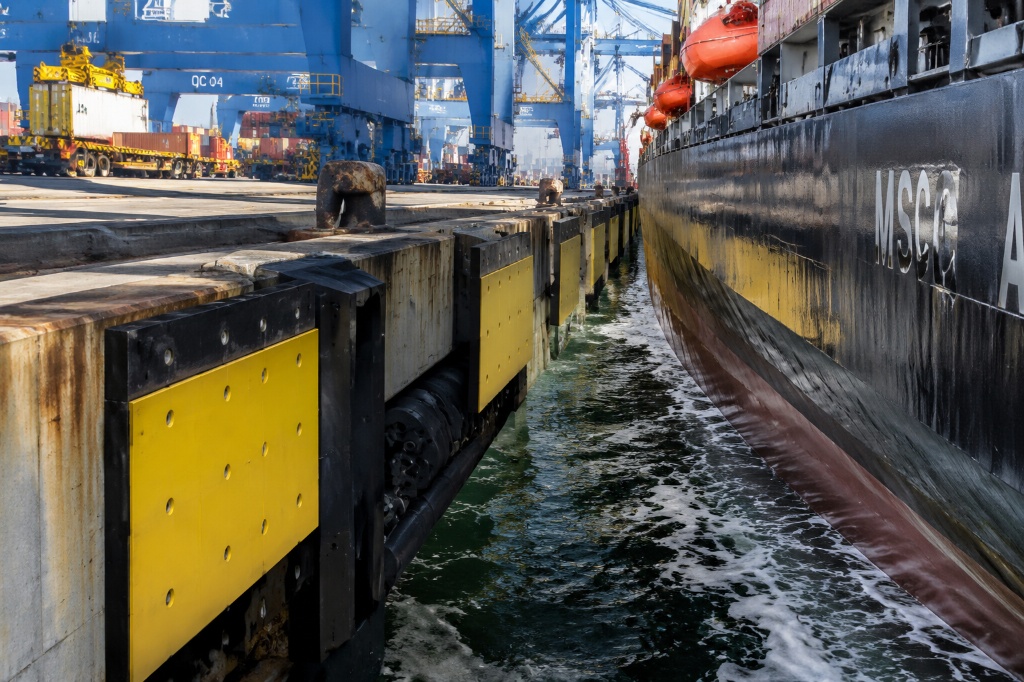
So what do you do? You put a UHMWPE sheet on the front. It’s slick. It’s tough. It takes the hit and lets the vessel glide. Think of it as a replaceable armor plate. It bolts onto the rubber fender face. When the steel hull makes contact, it doesn’t grind against the rubber. It slides across the smooth polymer. Friction drops way down. That’s the whole point. Turn destructive shear into controlled sliding. Protect both the dock and the ship.
This guide walks you through the selection process. Five practical steps. No fluff. Just the engineering decisions that actually matter for your specific dock. Let’s dive in.
What Is UHMWPE Sheet for Marine Fenders and Why Use It?
Okay, so what exactly is this stuff? It’s a wear-resistant facing panel. You mount it on the front of your marine rubber fenders. The material is ultra-high molecular weight polyethylene. Long name, simple job: it’s slippery and it’s strong. When a vessel comes in, the captain tries to line up perfectly. But wind, current, maneuvering… it rarely happens. There’s almost always some lateral movement.
If the hull hits rubber directly, that side motion creates massive shear. Rubber fenders are designed to handle compression, not twisting. So something gives. Either the rubber tears, or the hull coating gets scraped off. The UHMWPE sheet changes that. It provides a low-friction surface. The ship slides instead of grabbing.
1. Load Transfer Between Vessel and Dock
Let’s trace what happens at the moment of contact.
The steel hull hits the UHMWPE pad first. That impact pressure spreads out across the panel. Then it transfers into the steel frontal frame behind it. From there, it distributes more evenly into the rubber fender body.
Two things happen here.
First, the peak pressure at any single point drops. Second, and more importantly, the slippery surface lets the ship slide. That sliding action turns lateral forces into axial compression. Basically, you’re letting the fender do its main job: absorb kinetic energy.
A properly matched pad and fender system does more than protect equipment. It’s part of your overall dock safety strategy. Engineers use it to cut down friction damage and extend service life. Straightforward.
2. Key Properties That Make UHMWPE Suitable
Why does this material work so well? Look at the properties.
Friction coefficient: In wet seawater, it’s 0.1 to 0.2. That’s extremely low. A heavy steel hull glides across it. No catching, no stuttering.
Impact and abrasion: The PE-1000 grade has long polymer chains. They absorb repeated shock. No cracking, no peeling, even after years of heavy use.
Compression and creep: Under constant pressure from a moored ship, the sheet holds its shape. It doesn’t thin out or deform. Your bolts stay tight.
Water and corrosion: Zero absorption. It doesn’t swell, rot, or degrade in salt water. Decades of immersion? No problem. Dimensional stability stays intact.
3. Protect Both Vessel and Dock
Here’s another angle. It’s not just about saving your fenders. The ship owner cares about their hull too.
A good UHMWPE panel protects both sides. The smooth surface stops marine growth from building up on the fender face. No barnacles, no sharp edges to scrape the hull paint. That paint stays intact longer. And when the panel eventually wears out? Replacement is easy. Unbolt the old ones. Bolt on the new ones. Done.
Compare that to repairing a damaged rubber fender system. That usually means cranes, divers, extended downtime. Very expensive. Very disruptive. So , the upfront investment in UHMWPE pays off.
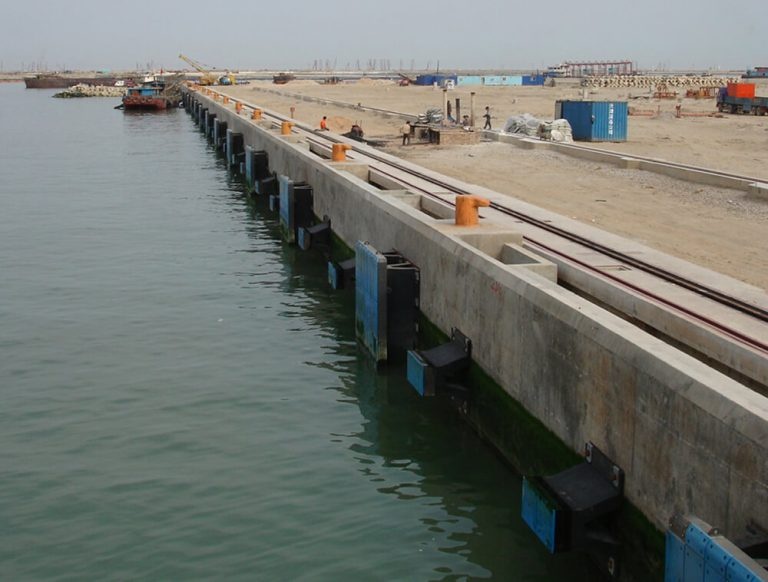
Step 1: Select the Right UHMWPE Sheet Grade and Color
Not all UHMWPE is the same. That’s the first thing to get straight. The grade you pick directly affects how long the panel lasts. And how well it performs.
For most commercial ports, virgin PE-1000 is the standard. Molecular weight: 3.5 to 5 million g/mol. That gives you excellent abrasion resistance and impact strength. It can handle fully loaded container ships slamming in day after day.
But there are other grades. Let’s break them down.
| Material Grade | Key Features | Recommended Applications | Relative Cost |
| Virgin PE-1000 (Virgin) | Standard molecular weight (3.5–5 million g/mol). Excellent abrasion resistance and impact strength. | Commercial container terminals, bulk cargo ports, high-frequency berthing positions. | Standard procurement cost. Low total lifecycle maintenance expense. |
| Enhanced / Modified UHMWPE | Higher molecular structure. Improved impact resistance and low-temperature toughness. | Extreme cold-weather ports, heavy ore terminals, extreme load zones. | Higher initial investment. Better suited for harsh conditions. |
| Reprocessed / Recycled UHMWPE | Lower molecular density. Lower cost but reduced abrasion and impact life. | Light-duty marinas, inland barge docks, low-frequency berthing. | Low initial price. Higher risk of early cracking. |
Now, color. It’s not just about looks.
Black (carbon black filled) gives you excellent UV stability. If your dock is in a sunny, tropical area, black is the smart choice. The carbon black stops sun damage.
Yellow, white, or other bright colors help pilots spot the fender at night. That’s a real safety boost. Just remember: unpigmented panels need UV stabilizers added. Otherwise, they’ll degrade faster in sunlight.
Step 2: Select the Correct UHMWPE Sheet Thickness for Your Dock
Thickness is critical. And you can’t guess it. The right number depends on vessel displacement, berthing speed, and how many times a day that fender gets hit. Too thin, and it wears through fast. Too thick, and you add unnecessary weight to the steel frame. Extra bulk costs money without much performance gain.
So where’s the sweet spot? It depends on your specific operation. Evaluate thickness alongside the overall marine fender design, including vessel size and docking frequency.
Here’s a rough guide for typical commercial uses:
- 20mm to 30mm: Light duty. Think marinas, tugboat bumpers, small inland docks. Occasional use, small vessels.
- 40mm to 50mm: The standard for many commercial docks. General cargo, feeder container ports, mid-sized berths.
- 60mm to 80mm: Heavy duty. Large container terminals, bulk commodity ports, places with big tides. High energy.
- 80mm+ (100mm and above): Extreme. VLCC oil terminals, LNG berths, arctic structures. Specialized and serious.
The pattern is simple: higher energy and more frequent use need thicker panels. When in doubt, go thicker. The extra material cost is small compared to unplanned replacement downtime.
Step 3: Choose UHMWPE Pads Based on Your Marine Fender System
Different fenders mount the pads differently. It depends on whether you have a steel frontal frame or not. Each rubber fender type has a different face configuration. You need to match the pad layout to the fender.
Let’s go through the common ones.
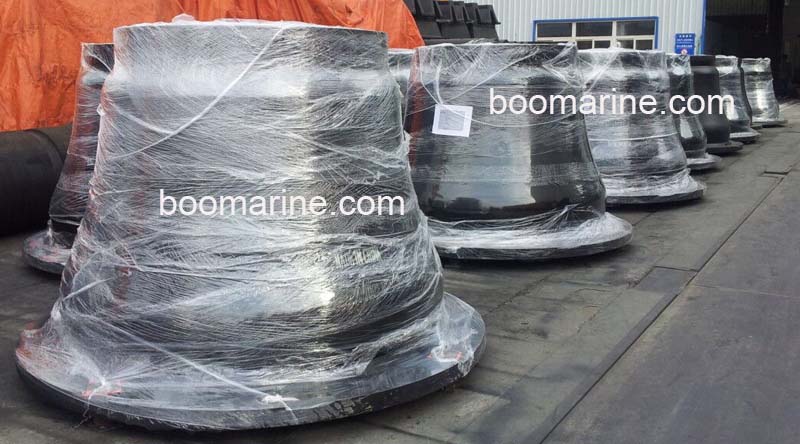
Super Cone and Super Cell Fenders
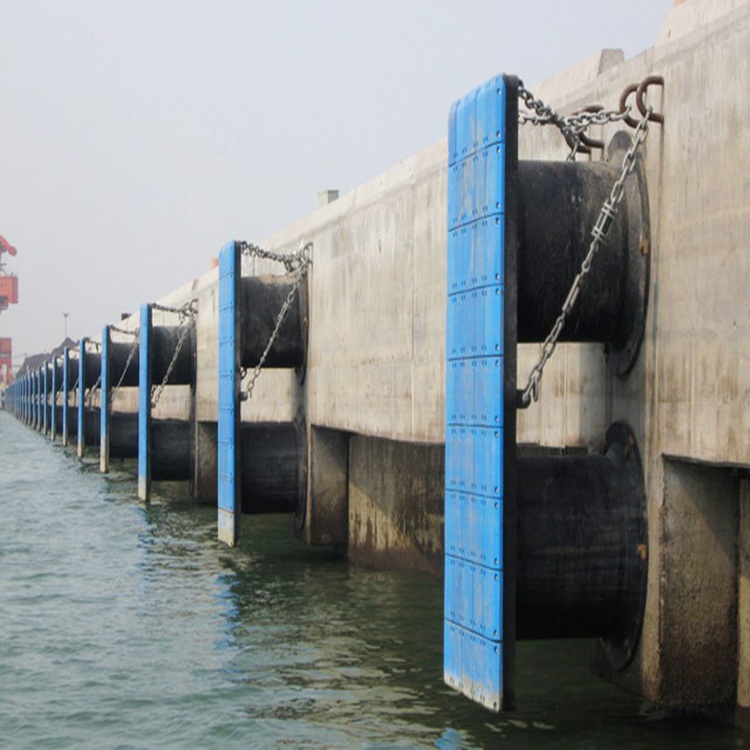
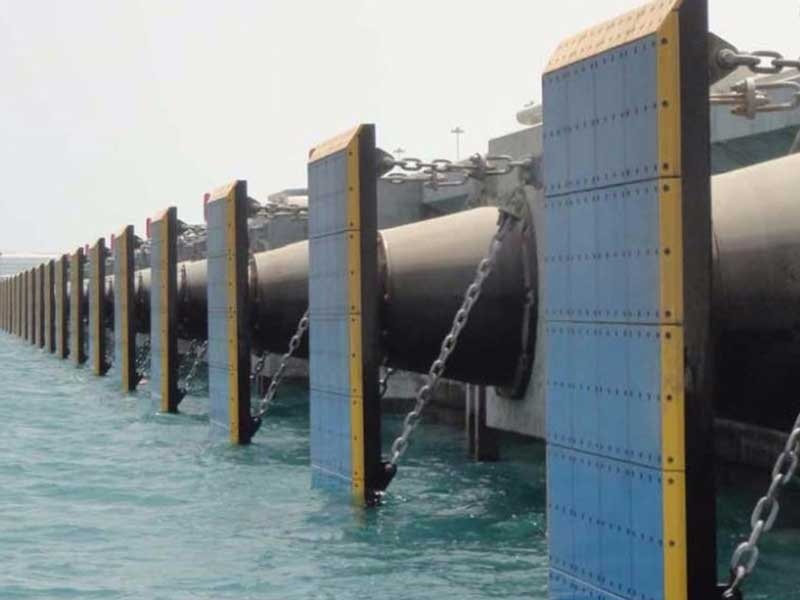
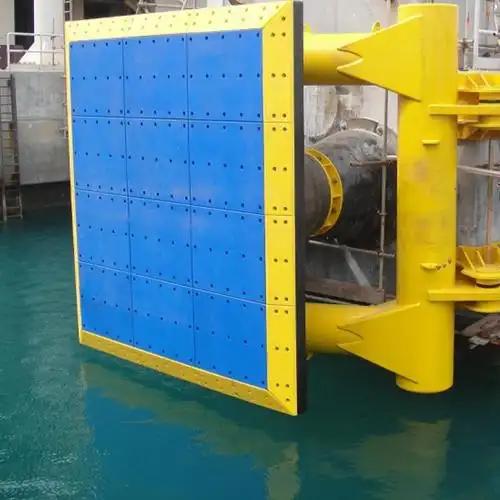
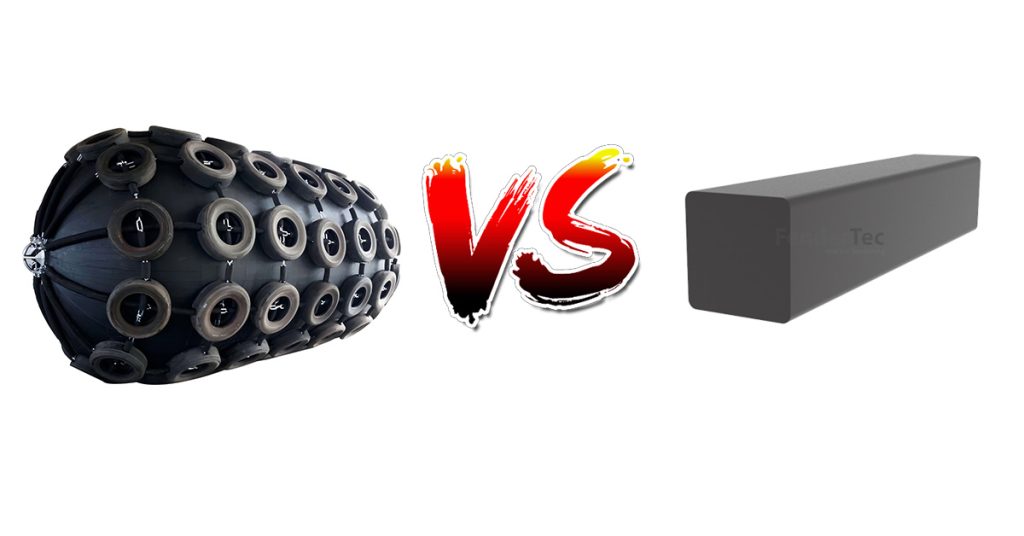
These big energy-absorbing fenders have large steel frames in front. That frame acts as a mounting plate. You’ll see multiple UHMWPE sheets bolted side by side across the face. They form a continuous, low-friction surface that covers the whole fender width.
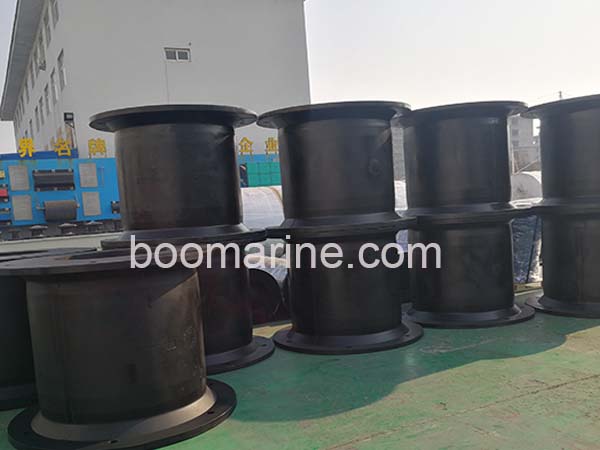
Arch Fenders
Arch fenders are different. They often mount the pads directly onto the rubber itself. No steel frame in between. The pads are smaller and arranged in rows along the arch. Compact and integrated.
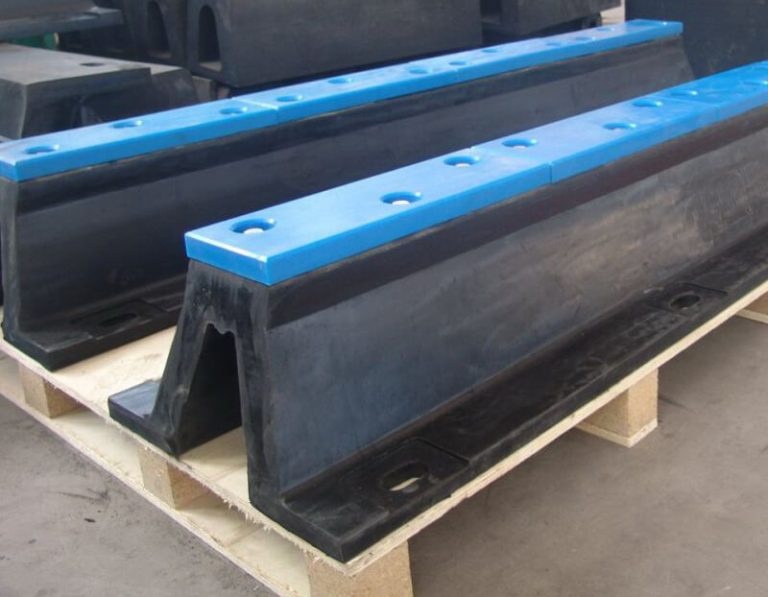
D-Type and Square Fenders
These usually get custom-sized strips or pads. They mount on the outer face, sometimes wrapping around the sides. The goal: protect the rubber from tugboats or workboats that bump and rub during maneuvering.
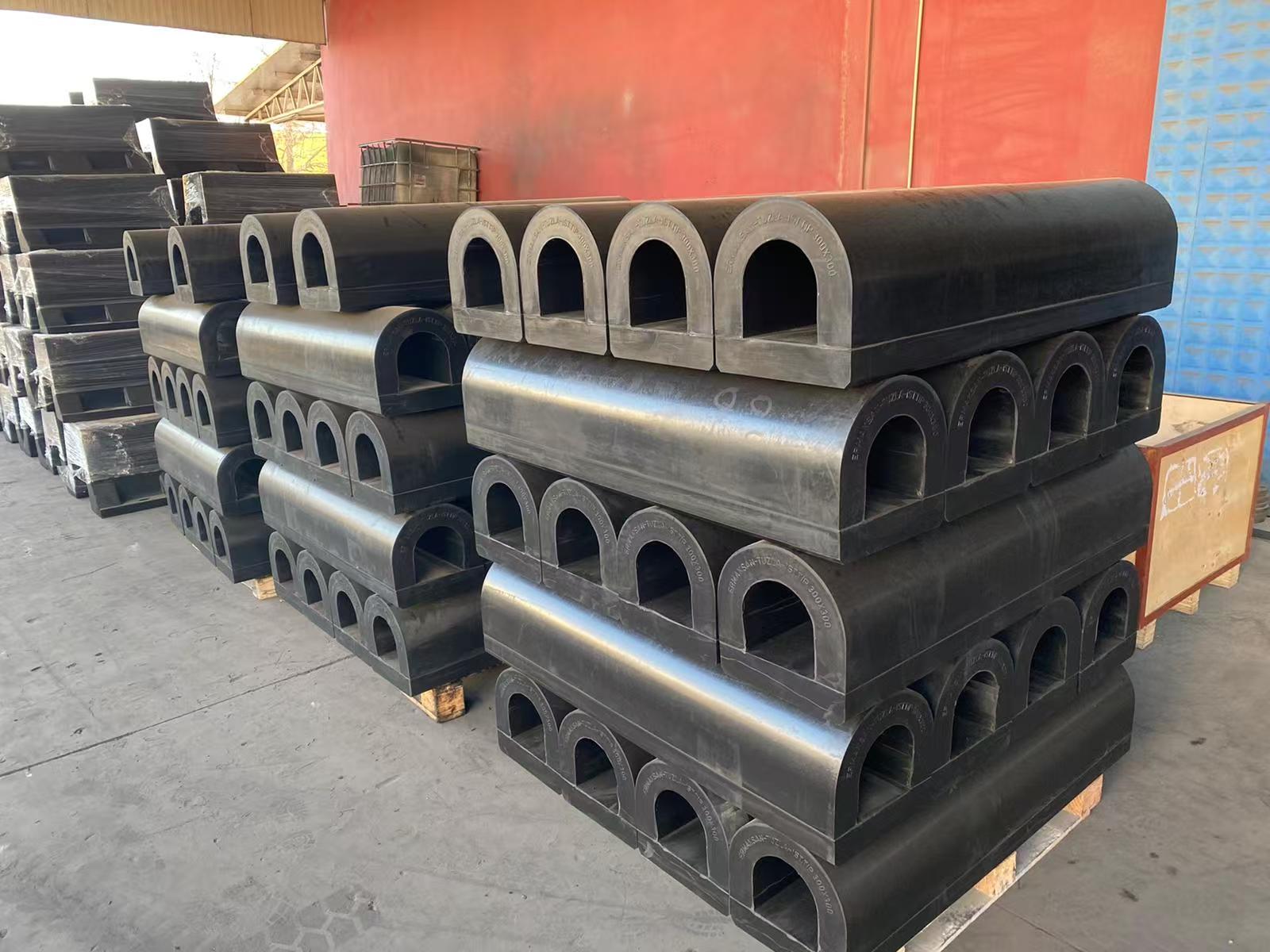
So the takeaway? Look at your fender type. If you have a steel frame, use larger flat sheets. If you’re mounting directly to rubber, go with smaller pads and compatible attachments.
Step 4: Specify Custom Machining and Installation Details
This is where planning pays off. Precision CNC machining isn’t optional. Neither are things like bolt counterbore depth and thermal expansion gaps.
Even the best UHMWPE sheet fails if the hardware isn’t right. So pay attention here.
45° Beveled Edges
Most pads get a bevel or chamfer on the edges. Simple but important. The angled edge stops the ship’s hull from catching during sliding. It lets the vessel glide on and off smoothly. No snagging.
Countersunk Bolt Holes
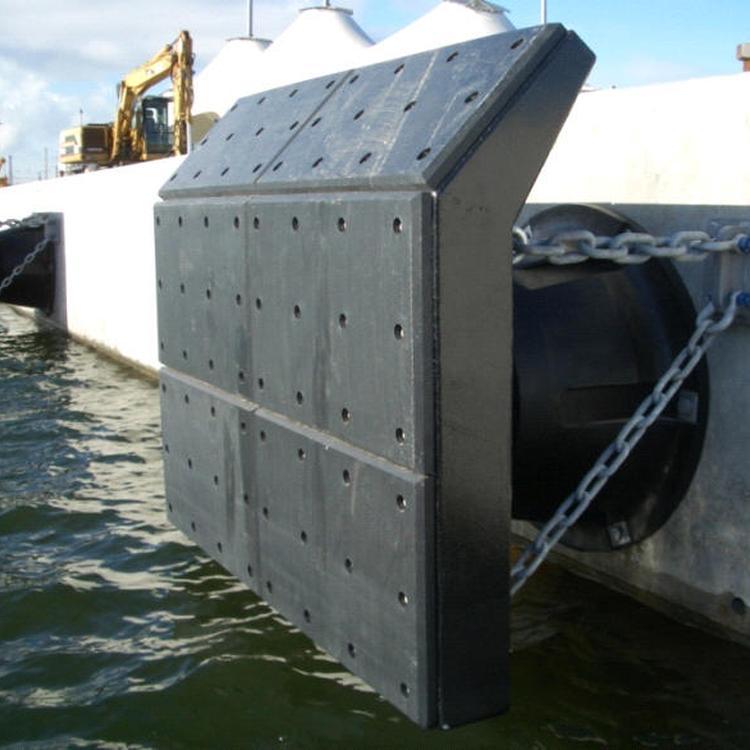
Rule number one: bolt heads must sit below the surface. If they stick out, they’ll scratch the hull. Countersunk holes let you recess the stainless steel fasteners. The hull only touches the smooth polymer. No metal contact, no gouged paint.
Calculated Expansion Gaps
UHMWPE expands and contracts with temperature. A lot. If you don’t leave room, the panels will buckle and warp. In summer heat, they’ll bulge.
So calculate the gaps based on panel size and local temperature range. Leave space between adjacent sheets. Simple fix, big problem avoided.
Precision CNC Machining
Get the bolt holes drilled at the factory. Don’t leave it for the field crew. Pre-drilled holes that match the steel frame anchors make installation smooth and accurate. CNC machining also lets you add custom edge profiles and counterbores. Everything fits right the first time.
Step 5: Avoid Common UHMWPE Sheet Selection Mistakes
Here’s a hard truth. Procurement often focuses too much on upfront price. That’s a trap. The cheapest sheet today is often the most expensive over time. It fails sooner. It costs more in maintenance. It forces unplanned downtime.
So avoid these common mistakes.
Mistake 1: Specifying cheap recycled material for a heavy-duty berth. Low molecular weight means low impact strength. In cold weather or during a hard hit, these sheets crack. They break. They don’t last.
Mistake 2: Ignoring UV stabilization in sunny climates. Without UV additives, the surface degrades. It gets brittle. Micro-cracks form. A few years of direct sunlight is enough to compromise the whole panel.
Mistake 3: Insufficient counterbore depth or no expansion gaps. Bolt heads that aren’t buried deep enough will scratch the hull. Expensive repair. And if you skip expansion gaps, the panels will buckle and warp as temperatures swing.
Mistake 4: Choosing thickness based purely on budget. A thin panel wears out faster. You replace it more often. The lifecycle cost often exceeds any upfront savings. Do the math.
FAQs About UHMWPE Sheet Selection
Q1: How long does a UHMWPE sheet fender pad typically last?
Under normal conditions, a good virgin PE-1000 sheet can last 10 years or more. That assumes proper installation and regular checks. Keep an eye on wear patterns. Check bolt torque periodically. Simple actions that extend life.
Q2: Can individual UHMWPE sheets be replaced if damaged?
Yes. That’s one of the biggest advantages. The modular design means you can swap out a damaged sheet without touching the rest of the fender. Unscrew the bolts. Pull off the old pad. Bolt on the new one. No need to remove the whole rubber fender assembly.
Q3: What factors affect the UHMWPE sheet price for marine projects?
The price depends on several variables. Polymer grade is a big one. Virgin PE-1000 costs more than recycled. Thickness and area drive material volume. UV stabilization with carbon black adds cost. So does precision CNC machining for bevels and countersunk holes. Get quotes with all specs clearly defined.
Conclusion: Selecting the Right UHMWPE Sheet for Marine Fenders
Choosing the right UHMWPE sheet isn’t rocket science. But it does need a systematic approach. Think about the grade. The thickness. The fender type. The machining details. Each step builds on the previous one. Get all five steps right, and you extend fender life. You protect hulls. You keep maintenance costs down. It’s a proven solution.
For custom UHMWPE sheets, precision CNC machining, and integrated dock protection, Boomarine delivers quality products. Their engineering team can provide CAD drawings, technical data sheets, or specific project recommendations and quotes. Worth reaching out when you’re ready to spec your next order.ys to get the details right. A good low-friction facing panel is a simple thing, but it has a huge impact on how well the whole system works.